photography
A Consent-First Guide to Guest Photo Boundaries at Events
A practical, people-first way to set photo boundaries before an event, communicate them clearly on the day and handle requests with care afterwards.
The onesnap team · 7 October 2026 · 8 min read
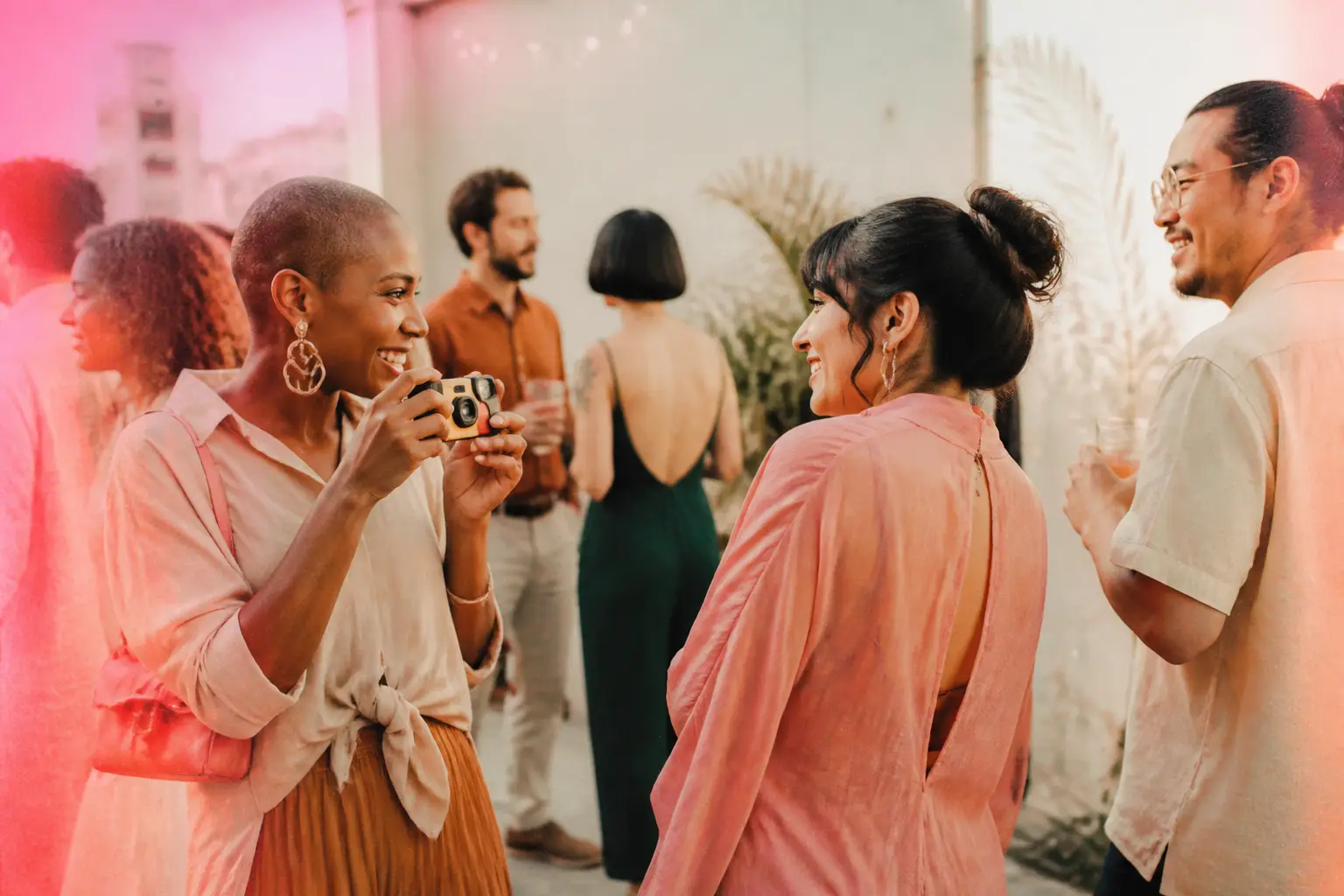
Photos can make an event feel wonderfully communal: a friend’s perspective from the dance floor, a quiet table conversation, a proud family moment, the details a host was too busy to notice.
They can also create discomfort when people are photographed unexpectedly, posted without being asked, tagged publicly, or included in images that travel further than they expected. Good guest photo etiquette is not about making an event stiff. It is about making the boundaries clear enough that people can relax.
The simplest principle is this: being invited to an event is not blanket permission to photograph, share, tag, promote or reuse someone’s image. These are separate decisions. Build your photo plan around that distinction.
Decide what you are actually allowing
Before writing a sign or sending an invitation, make a few practical choices. A vague instruction such as “please respect privacy” leaves guests guessing. A short, specific policy gives them something useful to follow.
Consider each part of the photo journey.
- Taking photos: Are guest photos welcome throughout the event? Are there spaces, people or moments where cameras should stay away?
- Close-ups: Should guests ask before taking a clearly identifiable portrait of someone they do not know well?
- Sharing: Can guests share photos privately with friends and family? Can they post publicly? Should the host, couple, family or speaker share first?
- Tagging and location details: Is tagging welcome, optional or off limits? Should guests avoid naming the venue or sharing live location details?
- Professional photography: Will there be a photographer? If so, what coverage do you want from them, and which images may be used beyond the event?
- Requests after the event: Who should guests contact if they want an image removed from a host-controlled gallery or social account?
There is no single policy that suits every gathering. A birthday dinner with close friends may need a light touch. A school event, community gathering, workplace function, private venue or sensitive occasion needs more deliberate safeguards.
The University of Auckland’s inclusive-event guidance puts the interpersonal standard plainly: no photography of an individual without consent. It also recommends organisers obtain attendee consent and check venue permission. Read the guidance.
Make the rules fit the moment
The most respectful policies are often selective rather than all-or-nothing. You can welcome casual photos at a celebration while protecting a ceremony, presentation or personal conversation.
For example, your plan might include:
- A no-photo ceremony or presentation: Guests put phones away until the MC, officiant or presenter says otherwise.
- Personal photos only: Guests may take photos for themselves but should not post images of others without permission.
- A designated photo-friendly area: A backdrop, welcome table or outdoor corner gives willing guests an obvious place to take group shots.
- A no-camera space: A quiet room, support area, backstage space or children’s activity zone can be clearly off limits.
- A host-approved sharing plan: Guests contribute photos to a shared event roll, while the host chooses when it is revealed.
For an unplugged ceremony or presentation, tell people before the day, use a sign at the entrance, and repeat the request just before it begins. That gives guests a fair reminder when it matters most. Easy Weddings also recommends advance notice, signage and a verbal reminder for unplugged wedding moments.
Communicate early, then repeat calmly
Do not rely on a single small sign near the door. Guests arrive at different times, may miss a briefing, or may not understand what “private event” means in practice.
Use a layered approach:
- Invitation or registration: State the main photo rule before people decide to attend.
- Pre-event message: Repeat any important restriction, especially an unplugged segment or child-safety boundary.
- Entry sign: Give a short version that people can read in seconds.
- Welcome announcement: Ask the MC, host or organiser to restate the rule warmly.
- Photo-sharing instructions: Put the posting and tagging rules beside any QR code or gallery invitation.
New Zealand’s Privacy Commissioner identifies event terms and signage as common ways to notify attendees when photography is taking place, and recommends a process for concerns about images that are taken or shared. See its guidance on people in public places.
Try wording that is direct without sounding accusatory:
Photography is welcome during the celebration. Please ask before taking close-up photos of other guests, and do not share or tag photos of someone else without their permission. No guest photography during the ceremony. For any removal request, please contact [name and contact method].
For a smaller private gathering, you might be even more specific:
Please keep photos within this group and do not post images from tonight publicly unless everyone pictured has agreed.
The goal is not to police every interaction. It is to give considerate guests a clear standard and give anyone uncomfortable a straightforward path to speak up.
Treat children and sensitive contexts with extra care
Where children are involved, use a higher standard than a general adult event. Seek parent or guardian permission where appropriate, avoid attaching names or location details to children’s images unless authorised, and make sure every staff member or photographer understands the rule.
The New Zealand Privacy Commissioner recommends informed consent or an opt-out process for children and young people, including clear information about purpose, use and sharing. It also says consent should be able to be withdrawn where feasible, including through requests to remove previously published images. Read the children and young people guidance.
For school events in the United States, photo practices can also intersect with school privacy obligations. The US Department of Education notes that whether federal student privacy rules apply can depend partly on whether the school maintains the image. Read the Department of Education FAQ.
For child-directed online services in the United States, images of children can be treated as personal information under COPPA, with notice and parental-consent requirements for covered operators in relevant circumstances. The FTC explains the scope and requirements.
In practical terms, a children’s event policy should answer: who may take photos, where they may be shared, whether names are ever used, and whom families can contact with a concern.
The same extra-care approach is wise for health-related gatherings, cultural events, support communities, workplaces, religious occasions and any event where attendance itself may be sensitive.
Brief your photographer and check the venue
A professional photographer needs the same clear brief as guests, plus a little more detail. Explain:
- the purpose of the photos;
- restricted people, rooms and moments;
- any guests who do not want to appear;
- whether close-ups need individual permission;
- whether images are for private event memories only or may be considered for future promotion;
- who can approve any use beyond the event; and
- the venue’s conditions.
Do not assume a venue permits photography everywhere. The New Zealand Privacy Commissioner notes that public facilities can impose conditions restricting photography. Check the venue agreement, ask about restricted areas and pass the answer on before the event begins. Read more about venue conditions and privacy.
In Australia, organisations covered by the Privacy Act 1988 generally need to take reasonable steps to notify people about collecting identifiable images, including why the images are collected and how they are usually shared. The Office of the Australian Information Commissioner says express consent is good practice before publishing photos online after explaining the intended use and audience. Read the OAIC guidance.
Local rules vary, particularly where commercial promotion, minors, employment, schools or sensitive settings are involved. For a high-risk or commercial use case, seek advice suited to your location and circumstances.
Make opting out practical, not performative
A boundary only works if someone can use it without drawing unwanted attention to themselves.
Avoid making a guest negotiate with every person holding a phone. Instead, give them a named contact: the host, event manager, teacher, family liaison or another trusted organiser. Let that person quietly communicate the restriction to the relevant people.
After the event, be realistic about what you control. You may be able to remove an image from the host’s gallery, a shared event roll or a host-managed social account. You cannot necessarily retrieve every copy another guest has saved or posted elsewhere. Say what you can do, act promptly on host-controlled channels, and ask the original poster to remove an image when appropriate.
A shared photo space can support clearer boundaries when its invitation includes a simple rule. onesnap is a mobile-first, browser-based shared disposable camera for events. Guests can join through an event QR code or invite link without creating an account or downloading an app, and hosts choose when the shared roll is revealed. If you use any shared photo collection, pair the access instructions with your capture and sharing expectations rather than treating contribution as permission for unrestricted reuse.
A final host checklist
Before guests arrive, confirm that you can answer these questions in one or two plain sentences:
- What photos are welcome here?
- What moments or spaces are off limits?
- Do guests need to ask before close-ups?
- What may be shared publicly, tagged or location-labelled?
- What is the rule for children?
- What are the venue’s conditions?
- Who handles a concern or removal request?
Clear boundaries do not reduce the warmth of an event. They help people participate on terms that feel safe, considerate and genuinely celebratory.
Sources and further reading
- Posting photos and videos | OAIC
- Hosting inclusive events and conferences – University of Auckland
- Office of the Privacy Commissioner | Recording people in public places
- Office of the Privacy Commissioner | Children and young people: photography and filming guidance
- Complying with COPPA: Frequently Asked Questions | Federal Trade Commission
- FAQs on Photos and Videos under FERPA | Protecting Student Privacy
- Is it rude to have an unplugged wedding? | Easy Weddings
Written by the onesnap team with AI assistance. We never use customer photos, invent testimonials, or publish named competitor comparisons.
Read our editorial policyReady to see the night from every angle?
Create an event