birthday
How to run a birthday photo scavenger hunt guests actually enjoy
A practical guide to creating a birthday photo scavenger hunt with clear boundaries, creative prompts, team roles and a relaxed photo share at the end.
The onesnap team · 2 August 2026 · 8 min read
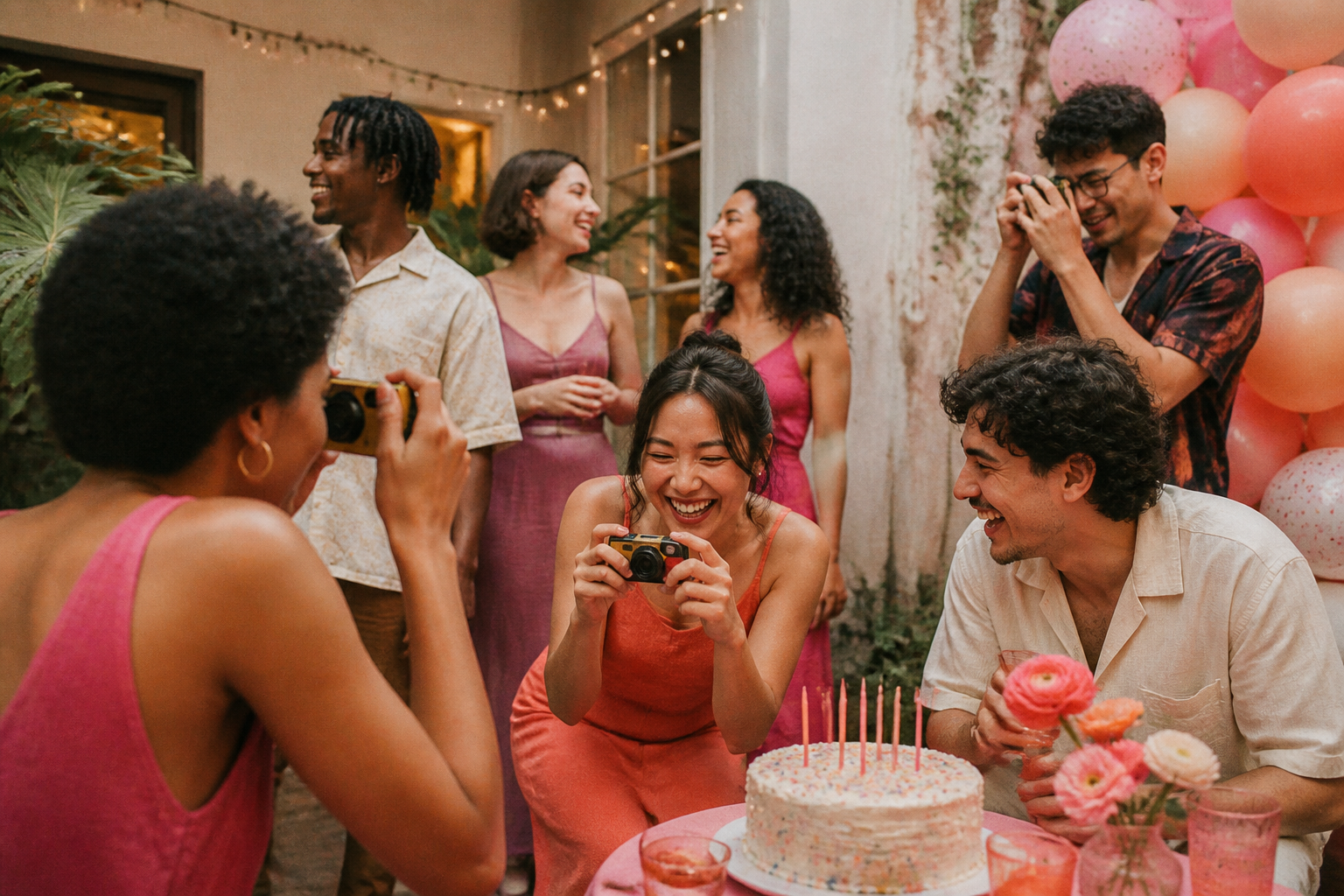
A birthday photo scavenger hunt can turn the usual party chatter into a shared creative activity. Instead of asking guests to find and collect objects, give them a list of scenes, details and imaginative challenges to photograph. The result is a collection of different perspectives on the celebration — and a game that can suit a backyard gathering, a hired room, a park picnic or a party at home.
The key is to treat it as a gentle, structured activity rather than a race to take the most photos. Clear boundaries, prompts with more than one possible answer, and a proper finish all help guests stay involved without feeling managed.
Start with a simple game plan
Before writing a prompt list, decide what the hunt needs to achieve at this party.
For young children, the aim may be movement, observation and working together. For teens or adults, it may be an easy icebreaker that gets different friendship groups mixing. For a family birthday, it may simply create a playful record of decorations, food, hands, laughter and small party details.
A good plan answers these questions:
- Where is the play area? Keep the activity within a clearly defined part of the venue: the backyard, a particular room, the picnic area or another agreed zone.
- Where is the meeting point? Choose one obvious place for instructions, help and the final share.
- When does everyone return? Give guests a clear finish time before they begin.
- Who is playing? Decide whether people will work alone, with a partner or in teams.
- How will photos be collected? Make this clear before the first prompt is tackled.
Photography activity guidance from the University of Wisconsin Extension recommends giving participants their list before shooting and setting a defined area and return time. Those small decisions prevent the hunt from taking over the whole party. Read the guidance.
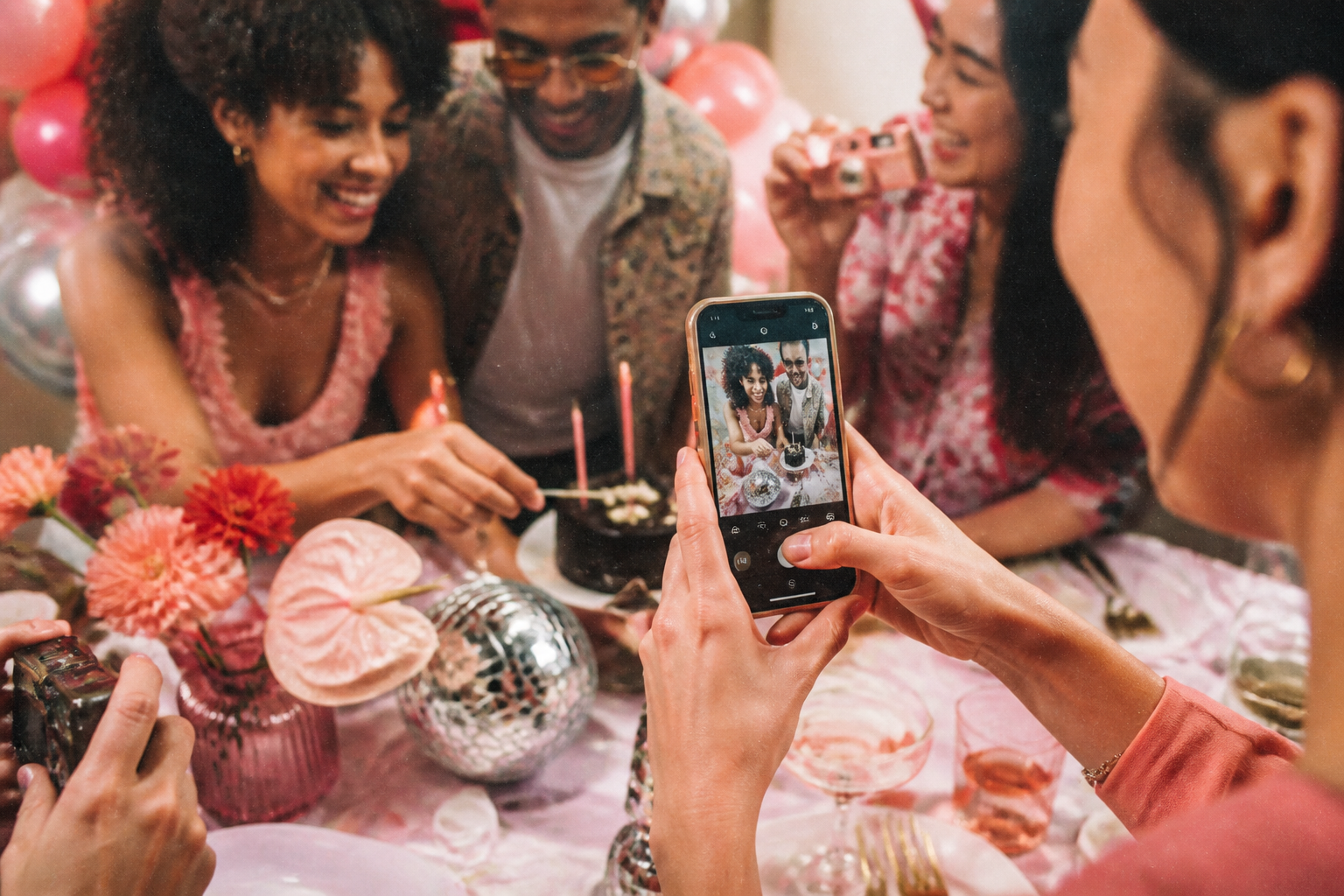
Teams can make a hunt more welcoming, especially when guests have not all met before. They also mean nobody has to be the person holding the phone, posing in every frame and remembering the list at the same time.
Give each team a few optional roles:
- Photographer: takes the still photos.
- Prompt keeper: reads the list and ticks off completed ideas.
- Creative director: suggests angles, poses or interpretations.
- Time watcher: helps the group return when asked.
- Props finder: gathers safe, available party items for a scene.
Guests can swap roles as they go. This is particularly helpful for anyone who would rather contribute behind the scenes than be photographed. A University of California, Berkeley team-building guide includes roles such as photographer, map holder, list keeper and timekeeper, showing how a clear job can help a group coordinate. See the team activity guide.
Avoid turning the list into a long test. A smaller, well-chosen set of prompts leaves room for chatting, cake and the rest of the celebration. If you use onesnap, the host can set a per-guest shot limit of 12, 24 or 36 still photos. That can give the game a pleasing disposable-camera feel and encourage guests to pause before taking each shot.
Write prompts that invite interpretation
The most enjoyable prompts are not all about reaching a particular landmark or finding a single object. Open-ended tasks make room for different ages, personalities and levels of confidence.
Photography education resources suggest creative challenges built around close-ups, simple backgrounds, framing, leading lines and unusual viewpoints. Illinois 4-H also uses literal or abstract interpretations in an alphabet activity, which is a useful reminder that not every prompt needs one exact answer. Explore the photography activity ideas and the Illinois 4-H approach.
Try a balanced list like this:
- Capture a close-up that feels like the birthday theme.
- Find a colour that appears in the decorations and photograph it in an unexpected way.
- Make a frame within the frame using a doorway, leaves, balloons or a table setting.
- Photograph lines that lead your eye somewhere interesting.
- Take a photo from high up or down low, while staying safe.
- Find something that represents the first letter of the birthday person’s name.
- Create a simple-background portrait of a consenting teammate.
- Capture hands doing something party-related.
- Recreate a classic birthday moment without copying anyone else’s pose exactly.
- Photograph a detail that another guest may have missed.
- Make a group photo that shows a mood: excited, curious, silly or triumphant.
- Take a final team photo at the meeting point.
The wording matters. “Find the red balloon” has one quick answer; “show us the party’s brightest colour” invites choices. Mix straightforward observation prompts with a few imaginative ones so younger guests have easy wins and older guests can get inventive.
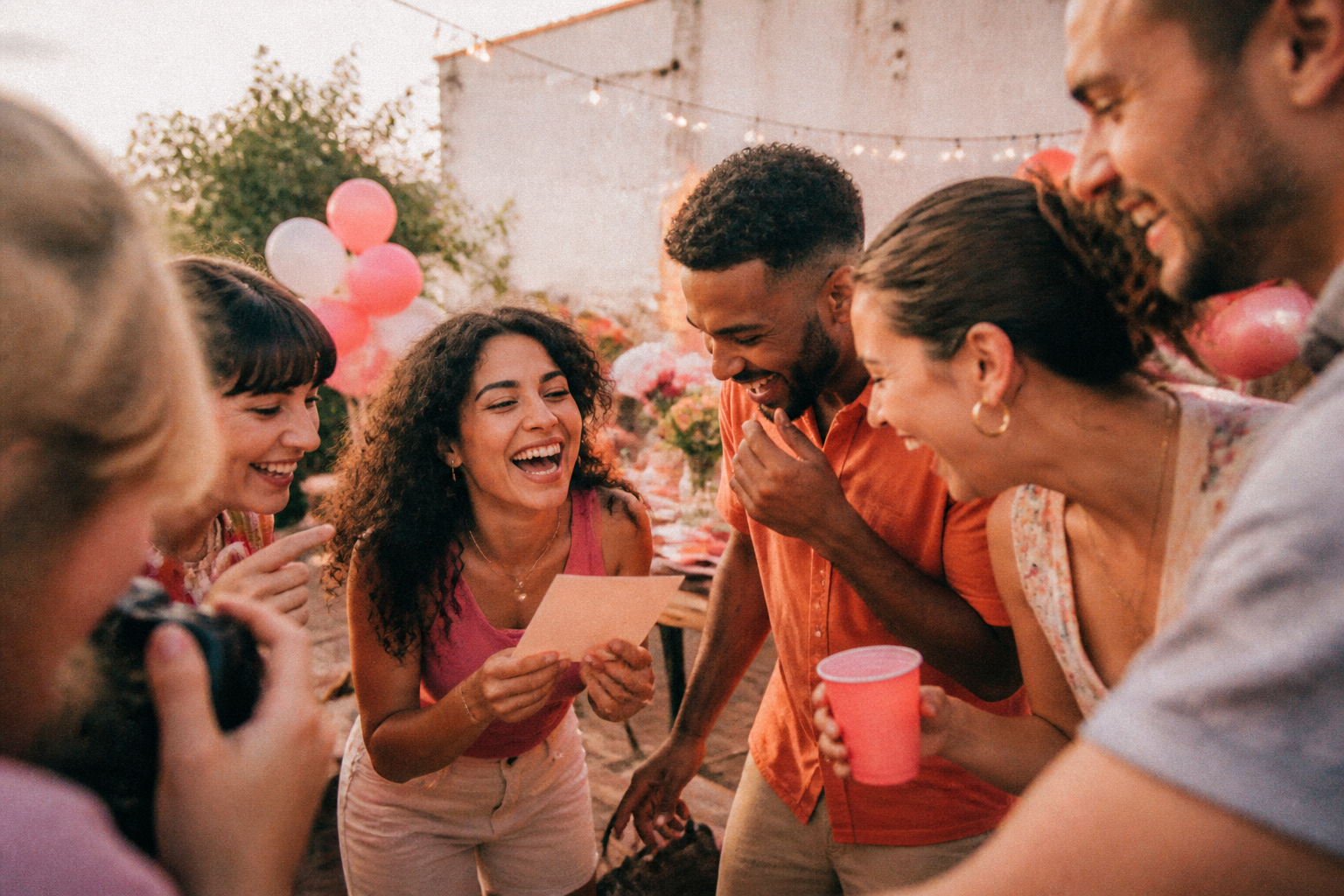
A defined play area is not just useful for organisation. It is part of making the activity appropriate for children and manageable for adults. Explain the boundaries aloud, point them out physically if needed, and let guests know whom to ask if they are unsure whether an area is included.
At the briefing, cover these basics:
- Stay inside the agreed area.
- Follow the venue’s rules at all times.
- Ask an adult before going somewhere that is not clearly part of the party space.
- Do not climb, run through restricted areas or move furniture and decorations for a photo.
- Photograph tasks, props, decorations and consenting teammates — not uninvolved guests, staff or strangers.
- Stop and ask if someone says they do not want to be photographed.
University of Central Missouri guidance for a photo hunt tells participants to obey site rules and obtain adult permission before playing. The National Program for Playground Safety also notes that adult supervision involves more than simply being present. Read the photo-hunt handout and playground supervision guidance.
Check the venue’s photography rules before adding the hunt to the run sheet. A private venue may set its own conditions, restrict photography or require permission. This can apply to hired halls, attractions, play centres and other spaces that may feel public but are privately operated. Western Australia’s guidance explains the distinction.
Set expectations for photos of children
For a children’s birthday, establish the photography and sharing approach before the event, not midway through the game. Let parents and carers know that the party includes a photo scavenger hunt, what types of photos the prompts encourage, and how photos will be shared or stored afterwards.
Australian eSafety guidance recommends checking with other parents before posting, sharing or tagging images that include their children. It also advises avoiding details that reveal full names, school identifiers, routines or location information. Read eSafety’s privacy advice.
Sport Integrity Australia advises getting parent or carer permission before photographing children and, where possible, the child’s consent too. It also advises removing images if consent is withdrawn. See the guidance.
In New Zealand, Ministry of Education guidance says organisers should communicate their photo policy to visitors and parents, ask people not to share images of other children without permission, and use signs to reinforce the policy at an event. It also recommends secure storage and deleting images when they are no longer needed. Read the Ministry guidance.
A short sign near the activity list can help:
Please photograph party details and teammates who are happy to join in. Ask before taking someone’s photo, and please do not share photos of other children without permission.
Adapt the wording to local expectations, the age of guests and the venue’s rules.
Make photo collection easy, but keep the reveal part of the fun
A printed prompt card works well, particularly where phones are not suitable for every guest. If guests are using their own phones, decide whether one phone per team is enough or whether each person can contribute.
onesnap gives hosts an event QR code or invite link for guests to join in a mobile browser, with no app download or account required. Each still photo is saved on the guest’s device before an upload is attempted, and queued photos sync when connectivity permits. That is useful for a backyard or park party where connection may vary.
Rather than interrupting the hunt to inspect every shot, save the viewing for the end. Ask each team to choose a favourite photo and say why they chose it. Wisconsin Extension recommends this kind of reflection because sharing images gives participants feedback and new ideas. Read the activity guidance.
If you are using a shared onesnap roll, the host chooses when it is revealed. Consider waiting until the hunt has finished, the cake has been served or everyone has gathered back at the meeting point. It keeps attention on the game rather than on constantly checking photos.
A relaxed finish is the real prize
The best birthday scavenger hunts do not need elaborate scoring. In fact, too much judging can make guests focus on speed rather than creativity.
Finish with a few light-hearted acknowledgements instead:
- Most surprising interpretation
- Best use of the party theme
- Cleverest detail
- Strongest team effort
- Photo that made the birthday person smile
You do not need to declare an overall winner. A short group share, a round of applause and a chance to see the different interpretations can be more memorable than a competitive finish.
A photo scavenger hunt stays fun when the rules are clear, participation is flexible and the prompts make guests notice the party in fresh ways. Give people a safe area, a return point, a role and permission to be creative. Then let the photos tell the story of the celebration from many different points of view.
Sources and further reading
- Fun Photo Activities to Do with Kids
- P a g e | 1
- Photography | Illinois 4-H | UIUC
- Photo Scavenger Hunt Create a team or snap photos
- Take Action | National Program for Playground Safety
- Photographing and filming children
- Privacy and your child | eSafety Commissioner
- Taking Photos or Videos | Child Safe Practices in Sport
Written by the onesnap team with AI assistance. We never use customer photos, invent testimonials, or publish named competitor comparisons.
Read our editorial policyReady to see the night from every angle?
Create an event