party
A Smarter College Party Photo Plan Than Relying on the Group Chat
A practical way for US college party hosts to collect still photos with clearer expectations, a defined event record and a respectful approach to consent.
The onesnap team · 13 September 2026 · 9 min read
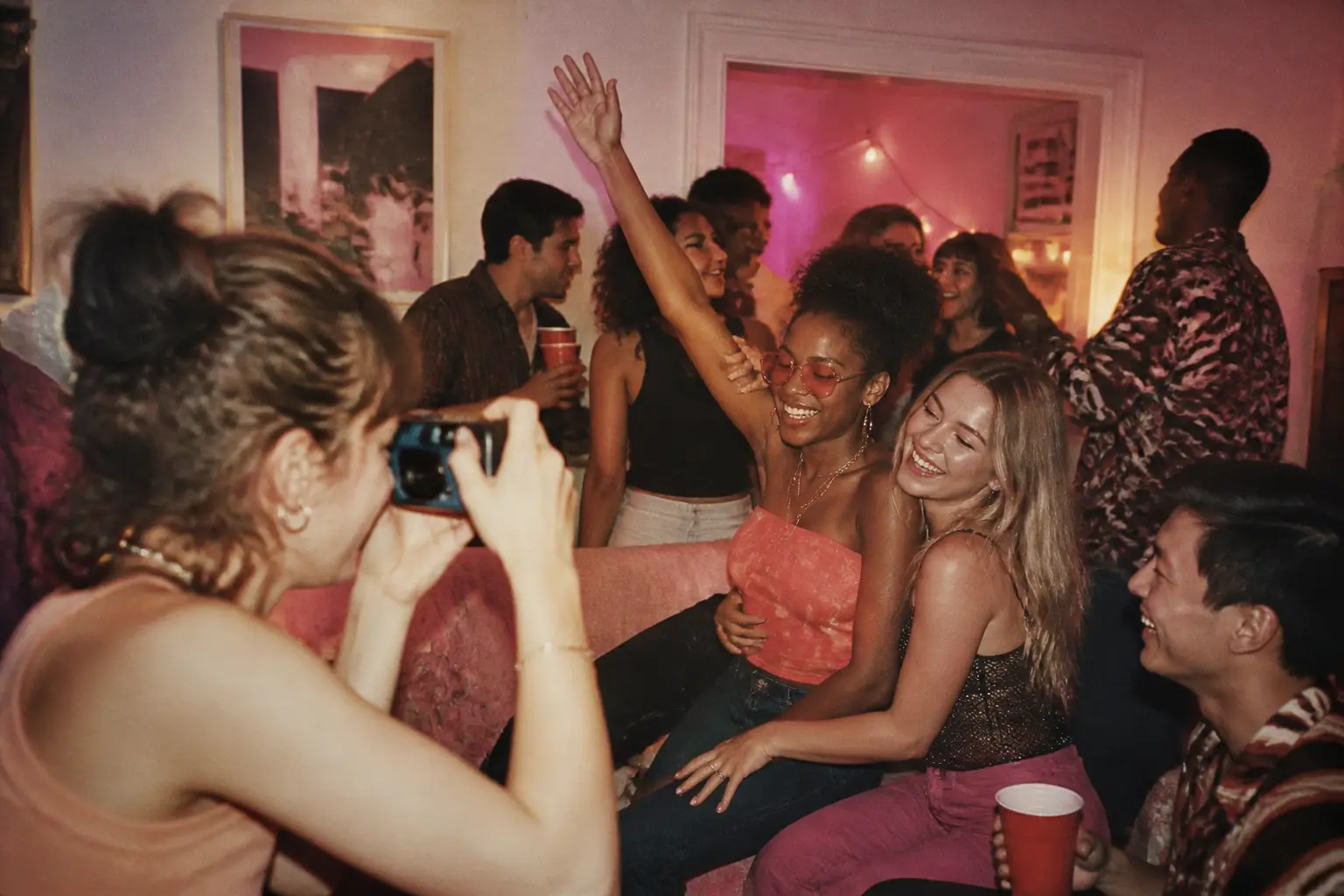
A college party can create the photos everyone wants later: friends arriving in theme outfits, a roommate reunion, a carefully decorated kitchen, a quiet conversation on the porch, or the slightly tired group shot at the end of the night.
The challenge is what happens next. In a group chat, images can quickly disappear beneath messages, turn up across several threads or be forwarded without much thought. That does not make group chats wrong. They are useful for coordinating the party and sharing a few favourites. But they are not a complete plan when you are hosting a larger apartment gathering, club social, residence event or student-organisation party.
A more considered approach is to make the photos a defined record of one event. Give contributors one place to add still photos, explain the purpose before the party begins and make it clear that party memories are not automatically material for public promotion.
That small amount of planning can keep the atmosphere easy while giving the host a clearer way to gather the night’s photos.
Start by defining the purpose
Before you make a QR sign or send an invite, decide why you are collecting photos. Keep the answer short and specific.
For example:
We are collecting candid still photos from tonight’s party so we can look back on the event afterwards.
This is more useful than a vague request to “send all your pics”. It signals that the collection has a particular purpose. It also helps separate event memories from other possible uses, such as a public social post, a society website or future promotion.
That distinction matters most where a club, venue, university group or organiser is involved. The Office of the Australian Information Commissioner notes that an image may be personal information when someone is identifiable or can reasonably be identified. Its guidance says organisations should explain why images are collected and how they may be shared. Read the OAIC guidance on posting photos.
For a US college-party host, the practical takeaway is straightforward: say what the photo collection is for before people start contributing.
Use one event entry point
Instead of asking people to find an old link in a fast-moving chat, give the party one clear place to contribute photos. Put the same entry point in the places guests naturally look:
- the invitation or event page
- a message sent before guests arrive
- the check-in table or entrance
- a sign near food, decorations or a designated photo spot
- a follow-up message the next day
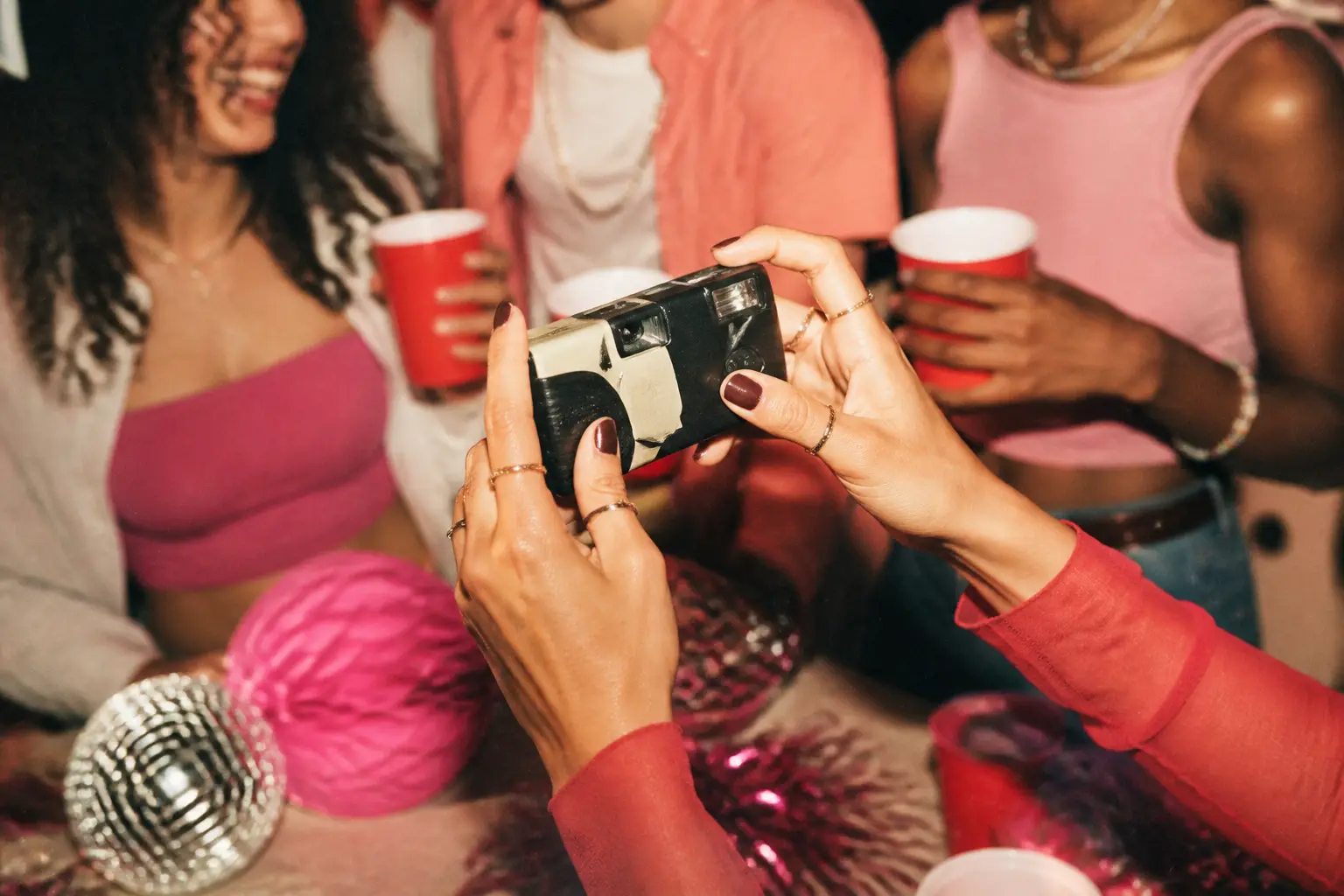
onesnap is a mobile-first, browser-based shared disposable camera for events. Guests join through an event QR code or invite link, with no onesnap account or app download required. It captures still photos only.
A single event QR code or link does not solve every question about photo sharing. It does, however, give the host a defined collection point instead of relying solely on scattered chat uploads.
Hosts can select a per-guest shot limit of 12, 24 or 36 photos. Choose the limit to suit the tone of the party. A lower limit can make each contribution feel intentional; a higher limit may suit a longer event with several parts, such as a pre-party gathering, the main celebration and a late-night wind-down.
Each photo captured with onesnap is saved on the guest’s device before an upload is attempted. If connectivity is poor at a crowded house or venue, queued photos sync when connectivity permits. That is useful to explain in simple terms: guests do not need to panic if a contribution is not immediately visible.
Put the photo notice ahead of the QR code
A QR code explains how to join. It does not explain that photos are being collected, why the organiser is doing it or whom to contact with a concern.
For an organised event, place a short photography notice at registration or entry, and include it in the event information sent beforehand. This aligns with the approach described in university guidance. The University of Illinois says photography notices should be prominent and outlines options for people who do not wish to be photographed. Its release-form guidance is here. The University of Melbourne also advises event organisers to use signs where photography is occurring and provide a way to contact the organiser. Read its guidance here.
Keep your notice easy to understand in a few seconds. For example:
Still photos at tonight’s party
Guests may take and contribute photos to the event’s shared photo roll.
Please ask before taking close-up photos of people you do not know well.
If you prefer not to be photographed, contact [organiser name] at [contact method].
We will ask separately before using identifiable photos in public promotion.
This is not about turning a party into a formal production. It is about giving people meaningful notice while there is still time for them to make a choice.

Make the opt-out route practical
A sentence on a ticket is not enough if no one knows what to do when a guest raises a concern. Name one organiser as the contact person, give them a contact method they will actually monitor and brief them before doors open.
Their role is not to make promises the event team cannot keep. Their role is to respond respectfully, clarify the situation and take practical steps within the organiser’s control.
That might mean:
- reminding contributors not to photograph a particular guest
- asking friends to respect that guest’s preference
- steering official event photography away from a person who has opted out
- confirming that the organiser will not put that person forward for any proposed public promotional use
- recording the concern so the organising team can respond consistently
If the party is using a shared camera, make participation optional. Guests should be able to attend without scanning the code, contributing photos or appearing in close-up photos taken by people they do not know.
The University of Illinois guidance is a useful reminder that organisers should consider how they will accommodate people who do not want to be photographed. See the guidance. A workable response is much more valuable than overly complicated wording.
Set friendly norms for contributors
College parties work because they are social, spontaneous and relaxed. The photo guidelines should support that, not dampen it.
Add a few simple expectations beside the QR code or in the party message:
- Contributing photos is optional.
- Ask before taking a close-up of someone you do not know well.
- Do not add photos that are embarrassing, invasive or clearly unwanted.
- Respect anyone who says they do not want to be photographed.
- Think before sharing someone else’s image outside the original party context.
- Do not assume that an event photo may be used in public promotion.
These are social norms rather than legal fine print. They give guests a shared standard for good judgement, especially in a setting where people may not know every person in the room.
George Washington University’s event guidance distinguishes between broad crowd or group context and imagery focused on an identifiable individual. Read the GW Privacy Office guidance. For party hosts, that is a helpful principle: the closer and more recognisable the photo, the more considerate the photographer should be.
Keep party memories separate from public promotion
Being photographed at a party, or contributing a photo to an event collection, should not be treated as blanket permission for a public post later.
If an organiser might want to use an identifiable image for a club account, organisation website, recruitment material or another outward-facing purpose, ask separately and explain the proposed use. The OAIC describes seeking express consent before publishing images online as good practice, including explaining what the image will be used for and who may see it. Read the OAIC guidance.
Separate permission is clearer for everyone. It avoids asking a guest to guess whether “party photos” means a personal memento, an organiser’s record or public-facing content.
Be clear about contributor permission too
Hosts should not assume that an uploaded image becomes theirs. In the United States, the person who takes a photograph is generally the author and initial copyright owner, subject to exceptions. The U.S. Copyright Office explains this general rule.
Before collecting uploads, publish plain-language contributor wording that covers the limited permission needed for the event photo collection. Adapt it to your event and have your university or organisation review it where appropriate.
A starting point could be:
By contributing a photo, you allow the organiser to include it in this event’s shared photo collection. You keep any rights you hold in your photo. Please contribute only photos you are comfortable sharing for this event purpose.
Do not use this as a substitute for a separate agreement if you want broader reuse. Be direct about any additional use and ask for the permission that use requires.
Choose the reveal deliberately
A party does not need to become a night of people checking their phones to see what has been added. With onesnap, the host chooses when the shared roll is revealed.
A later reveal can suit a college party because it keeps attention on the room, the music, the conversations and the people who showed up. Tell contributors the plan in advance: for instance, that the roll will be revealed after the event rather than during it.
Hosts have an authenticated admin area for managing their events and gallery. Use your event planning notes to decide who on the organising team is responsible for the QR code, the photography notice, contributor wording and the contact route for concerns.
Check whether under-18 guests may attend
Do not assume every college or campus-adjacent guest is over 18. If under-18s may be present, check the policies and legal requirements that apply to your organisation, venue and location before collecting identifiable images.
RMIT University’s club-event guidance states that photographs of under-18s require explicit written parent or guardian consent. Read RMIT’s media-consent guidance. While that guidance is Australian and institution-specific, it is a useful prompt for US hosts to check their own campus and local requirements rather than treating a college setting as an automatic adult-only environment.
A quick host checklist
Before the party starts, make sure you can answer these questions:
- What is the specific purpose of collecting still photos?
- Where will guests see the photography notice before they scan the QR code?
- Who is the named organiser for questions and opt-outs?
- What instructions will contributors see before they add photos?
- What norms will you set for close-ups, unwanted photos and reposting?
- Is public promotion completely separate from the event photo collection?
- What contributor permission is needed for the intended event purpose?
- When will the shared roll be revealed?
- Could under-18s attend, and have the relevant requirements been checked?
The group chat can remain part of the party. Use it for reminders, directions and the inevitable search for a lost jacket. But a defined photo collection, a visible notice and a respectful consent plan give the host a smarter way to gather the night’s still photos without losing sight of the people in them.
Sources and further reading
- Posting photos and videos | OAIC
- What staff and students need to be aware of when photographing or recording people
- Talent Release Forms - Strategic Communications and Marketing
- Privacy Guidance for Photo/Video recordings of university sponsored events | GW Privacy Office | The George Washington University
- What Photographers Should Know about Copyright | U.S. Copyright Office
- Media consent at club events - RMIT University
Written by the onesnap team with AI assistance. We never use customer photos, invent testimonials, or publish named competitor comparisons.
Read our editorial policyReady to see the night from every angle?
Create an event