wedding
A Shared Photo Roll for the Celebration After Your Elopement
Keep the ceremony intimate and make the later celebration feel shared with a simple, considerate plan for gathering guests’ candid still photos.
The onesnap team · 23 September 2026 · 8 min read

An elopement can protect exactly what matters most to you: a quiet ceremony, a meaningful location, a small circle, or simply a moment without an audience. Celebrating afterwards does not undo that choice. It gives the people you love a different way to be part of this new chapter.
A post-elopement celebration can be anything that suits you, from a relaxed backyard lunch to a restaurant dinner, a cake-and-champagne gathering or a more formal reception-style party. The essential point is simple: the ceremony was private, and this gathering is where you celebrate together. Post-elopement parties can take many forms, so there is no need to recreate traditions that do not feel like you.
A shared photo roll works particularly well here. It can gather the hugs at the door, the cousins meeting for the first time, the toast someone delivers with a slightly shaky voice, and the small scenes you may miss while talking with everyone. It is not an attempt to recreate the elopement. It is a record of the communal celebration that followed.
Start with clear language
Make it easy for guests to understand what they are attending. Your invitation, event page and welcome sign can use wording such as:
- A celebration after our elopement
- Our post-elopement celebration
- Come celebrate the newlyweds
- A newlywed party for [names]
This framing is kind to guests and honours the boundary you set around the ceremony. It also avoids creating confusion about whether the gathering is itself a wedding ceremony.
That distinction matters especially in New Zealand, where government guidance says a separate celebration after a wedding must not be presented as the legal wedding. A personalised marriage ceremony has its own legal requirements, including a celebrant, marriage licence and witnesses. Read the New Zealand Government guidance if you are planning there.
The same practical separation can be useful anywhere. In Australia, a legal marriage must be solemnised by an authorised marriage celebrant, and the law requires adult witnesses to be present. In the United States, marriage requirements vary by location. Your party invitation does not need to explain the legal details; it only needs to clearly say what the occasion is. If you are unsure, check the requirements that apply where your private ceremony will take place.
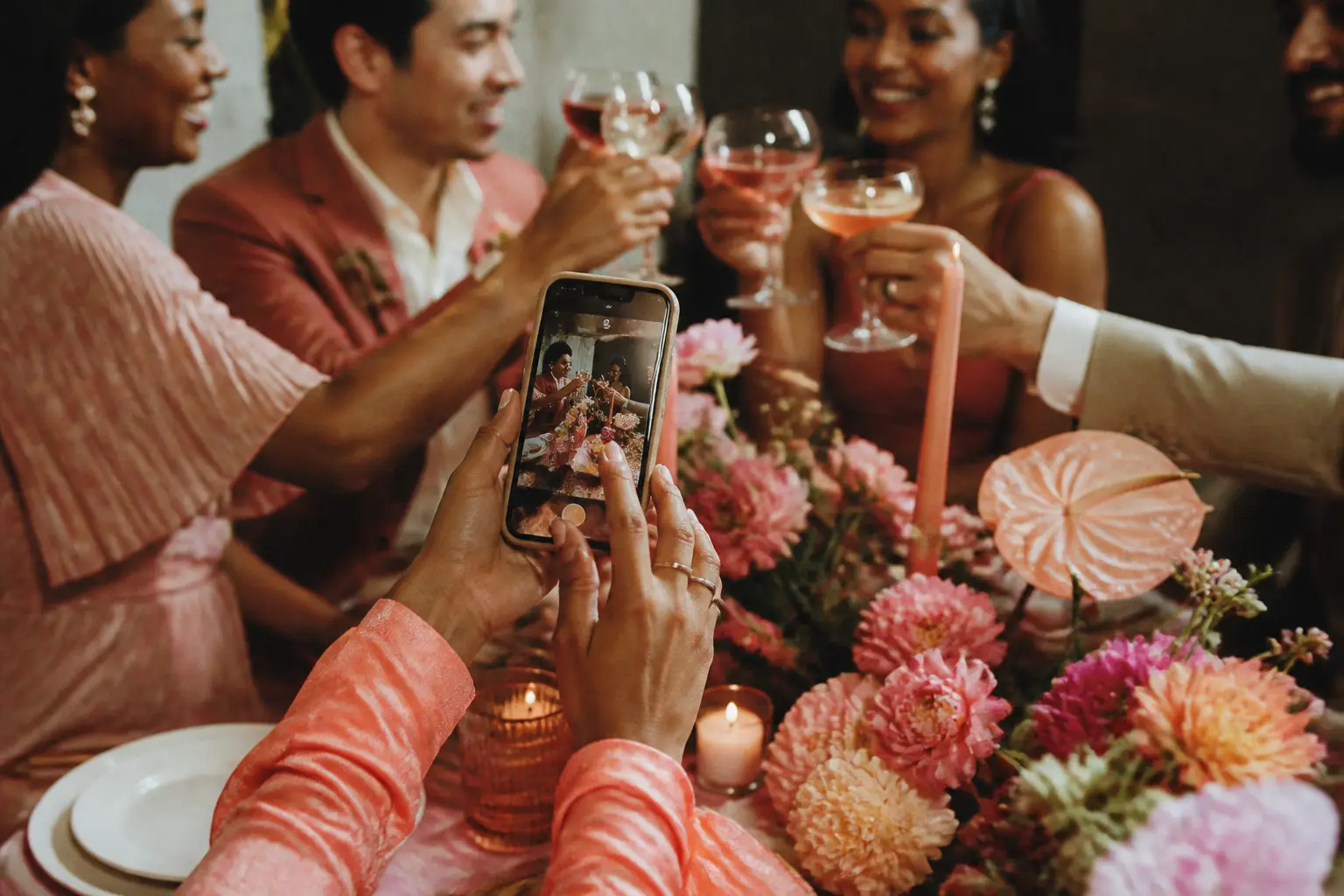
The best shared-roll plan begins with a narrow purpose:
Gather candid still photos from the celebration, from the people who are there.
That purpose gives guests a helpful role without making them feel responsible for documenting every moment. They can take a few images when something catches their eye, then return to the party.
If you would like to include images from the private elopement, make that a separate choice. You might add a small selection to the finished collection yourself, or share a few during the party in another way. The guest roll can then stay focused on the celebration: the people who gathered, the atmosphere they created and the moments they shared with you.
This creates a lovely, honest story:
- the ceremony was intimate;
- the celebration was communal;
- the shared roll holds guests’ perspectives of that celebration.
A shared roll can gather a wider range of candid moments, but it does not guarantee complete coverage. If you have booked a professional wedding photographer for the party, guests’ images can sit alongside that professional work rather than trying to replace it.
Make joining effortless at arrival
Guests are most likely to join when they receive one simple instruction at a natural pause point. Put the event QR code where people already stop: beside the welcome sign, on menus, at place settings or near the bar.
With onesnap, guests can join through the event QR code or invite link. They do not need an account or an app download. Onesnap is mobile-first and browser-based, so the instruction can stay short:
Scan, take a few candid still photos, and add your angle to our celebration.
Repeat the same message in the event details sent before the party. That way, guests who prefer to be prepared can join before they arrive, while everyone else has an easy reminder on the day.
Avoid loading the sign with explanations. A QR code, a clear request and a little warmth are enough. For example:
We eloped — now we’re celebrating with you.
Scan to add candid photos from tonight to our shared roll.
Please keep images in the roll unless we say otherwise.
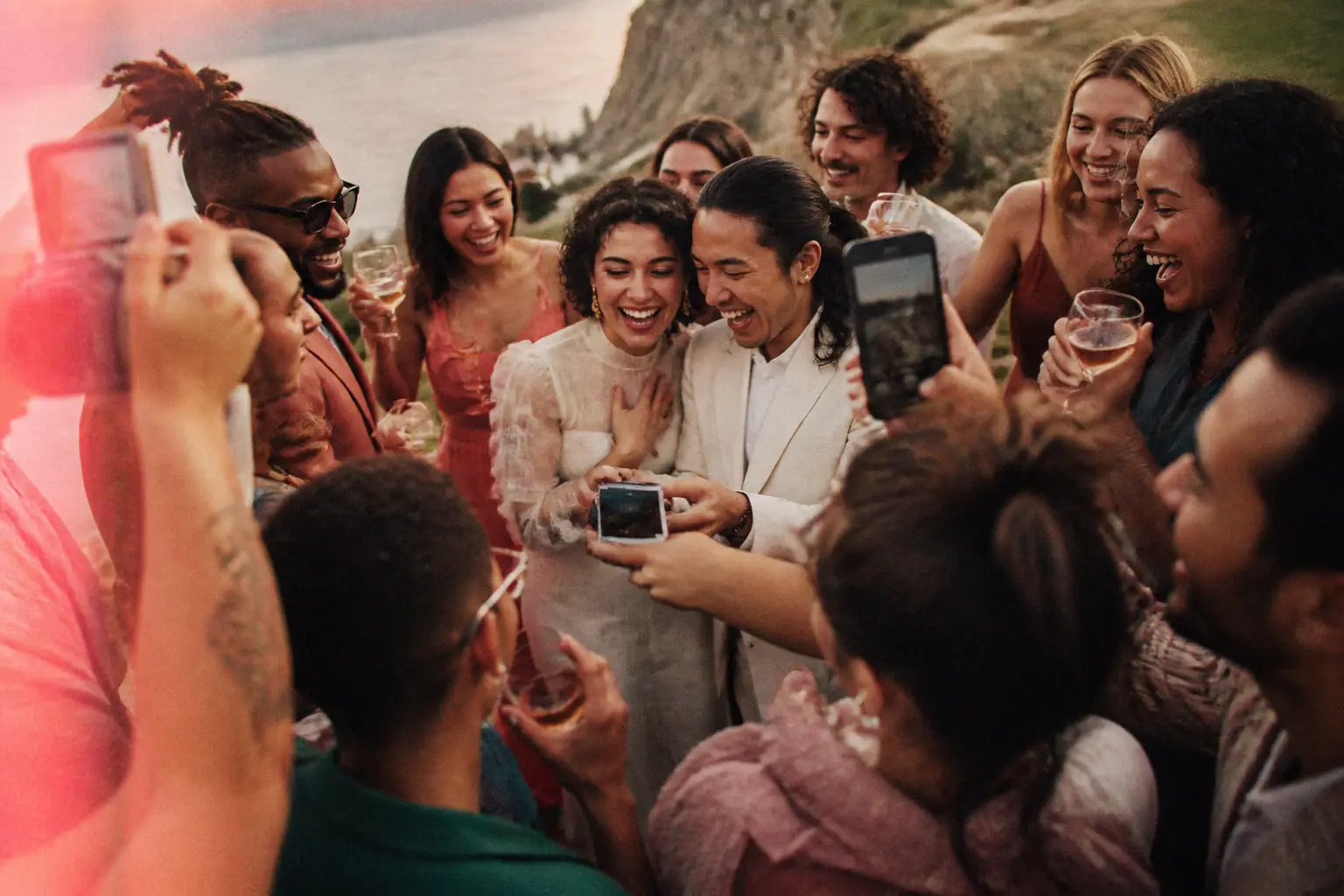
Guests sometimes need permission to take photos that are not posed group shots. A short list of prompts lets them notice meaningful details without turning the event into a task.
Choose prompts that reflect your actual plans. You might include:
- The first arrivals and reunion hugs
- A portrait of the couple with someone important to them
- The people at your table laughing together
- A toast, speech or clinking glasses
- The meal, cake or favourite shared dish
- An outfit detail, flowers, handwritten note or meaningful object
- Someone telling a story about the couple
- The dance floor, if dancing is part of the evening
- A wide shot that shows the feeling of the room
- The final goodbyes
You can place these on a small card near the QR code, but keep the tone optional. “If you spot one, add it” feels more generous than a long checklist. The best candid photos usually happen when guests remain present and only reach for their phone occasionally.
Choose a privacy boundary before invitations go out
A post-elopement party may bring together people who were not at the ceremony, including friends or relatives who feel disappointed, surprised or simply curious. A clear sharing boundary prevents the photo plan from adding pressure to an emotional day.
Decide what you would like guests to do with photos they take. Your preference might be:
- Keep celebration images in the shared roll rather than posting them publicly.
- Ask before sharing an image of the couple or another guest on social media.
- Avoid taking photos of children or anyone who has asked not to be photographed.
- Keep the elopement location private.
- Do not post images until the couple has made their own announcement.
Phrase this as a personal event preference, not a scolding rule. For example:
We’d love you to add your party photos to our shared roll. Please keep them private for now and check with people before posting elsewhere.
The host can choose when a onesnap shared roll is revealed, which can help you keep the experience centred on the party before everyone starts revisiting the photos. Hosts also have an authenticated admin area for managing their event and gallery.
Plan for patchy reception without making it a drama
Some appealing elopement celebrations take place in gardens, rural properties, restaurants with thick walls or destination settings where connectivity is uneven. Keep the QR code visible and offer the invite link in your event message so guests have more than one way to join.
Onesnap saves each captured guest photo on the guest’s device before an upload is attempted. Photos can queue and sync when connectivity permits. This means that the photo is saved on the guest’s device first, even where an upload cannot happen immediately.
There is no need to make connectivity a feature of the event signage. Keep the invitation and on-the-day instruction focused on the simple action you want guests to take: join the roll and add candid still photos from the celebration.
Check venue rules before sharing your plan
If the celebration is outdoors, at a destination venue or near a protected natural area, confirm what photography is permitted before printing signs or encouraging guests to take pictures everywhere. Rules can cover access, group movement, décor and photography.
For example, United States National Park Service locations may require special-use permits for weddings and elopements, with conditions that set limits around locations, attendance, vehicles and vendors. Some sites prohibit drones. Rocky Mountain National Park’s wedding guidance illustrates why it is worth checking the rules for your specific place rather than assuming a beautiful outdoor setting is unrestricted.
A simple photo plan is usually the most considerate one: follow venue directions, keep guests out of restricted areas and never ask them to interrupt other visitors’ experience of the location.
A calm run sheet for the shared roll
You do not need a production schedule. A few small decisions will make the shared roll feel intentional.
- Before the party: Create the roll, choose whether the gallery will be revealed during or after the event, and decide your posting preference.
- With the invitation: Explain that this is a celebration after your elopement and include the invite link if you wish.
- At arrival: Display the QR code with one plain-language instruction.
- During the gathering: Ask one trusted friend or family member to casually point guests towards the roll if it seems useful. They do not need to chase contributions.
- Afterwards: Let guests’ images tell the party’s side of the story, then share or keep the completed collection in the way that feels right for you.
Let the party be its own memory
There is no single correct way to celebrate after an elopement. You may want speeches and a dance floor, or only a long table, a favourite meal and the people who make you feel at home. A shared roll should follow that lead.
Keep the ceremony private if that is what you chose. Let the party be joyful without pretending to be something else. Then invite guests to contribute a few still photos of the moments they genuinely notice. The result is not a substitute for the elopement; it is a companion memory of everyone who came together afterwards.
Sources and further reading
- How to Plan a Special Post-Elopement Party to Celebrate Your Love
- Personalised ceremonies | New Zealand Government
- Weddings & Other Ceremonies - Rocky Mountain National Park (U.S. National Park Service)
- Find a marriage celebrant | Attorney-General's Department
- Solemnisation of marriages in Australia Part IV
- Marriage Ceremony · NYC311
Written by the onesnap team with AI assistance. We never use customer photos, invent testimonials, or publish named competitor comparisons.
Read our editorial policyReady to see the night from every angle?
Create an event