family
The Christmas Memory Table: A Gentle Plan for Gathering Family Photos
Turn the Christmas and New Year catch-up into a relaxed family photo handover: collect a few images, record the stories behind them and set up sensible preservation for the year ahead.
The onesnap team · 15 September 2026 · 8 min read
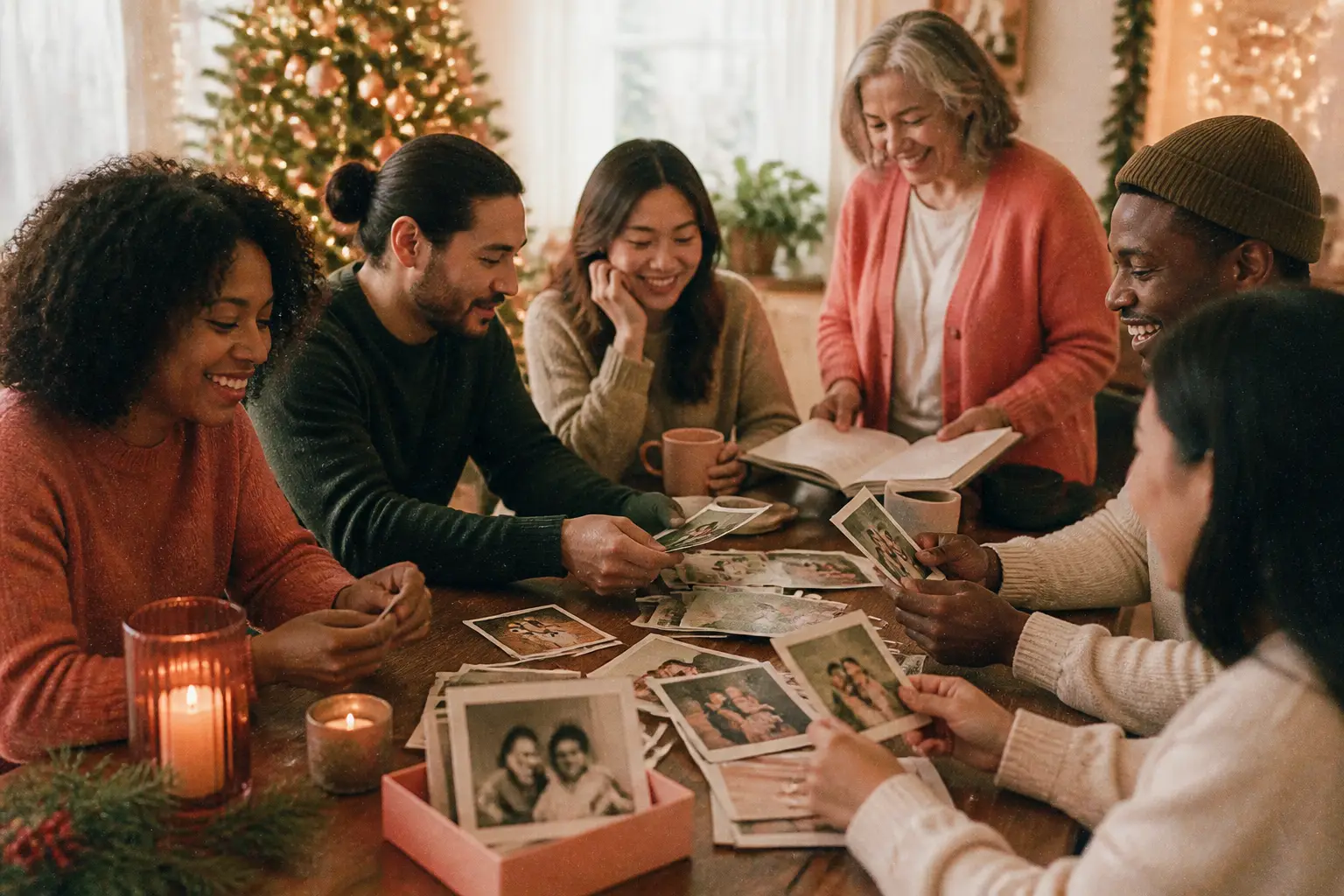
Christmas and New Year can be one of the few times each year when cousins, grandparents, siblings and family friends are together. That makes the holidays a valuable chance to do more than take new photos: it is an opportunity to gather older family pictures, put names to faces and record stories while the people who remember them are nearby.
The trick is to keep it low-pressure. Rather than attempting to sort an entire family archive between lunch and dessert, set up a small memory table or family photo handover. Invite people to bring a few items, contribute what they know and leave the rest for another day.
The Smithsonian Institution Archives suggests using a holiday gathering to bring generations and branches of a family together to identify and preserve photographs, albums, slides, film and letters. It is a helpful approach for a Christmas or New Year host: make space for the conversation, then let relatives take part at their own pace. Read the Smithsonian’s family preservation project.
Set a modest goal before anyone arrives
Avoid asking guests to bring every album or every file they own. That can feel like homework, especially during a busy holiday period.
Instead, add a short request to your invitation or family group message:
- Bring a handful of photos you would like help identifying.
- Bring one picture that younger relatives should know about.
- Bring a few digital files on a device if that is easier than carrying prints.
- Be ready to share names, places, dates or stories you remember.
A simple theme can help people choose. Try childhood homes, past Christmases, family pets, school years, moves between countries or towns, favourite holidays, weddings, or relatives whose stories are becoming harder to place.
For families travelling through the Australian and New Zealand summer break, make the task something guests can prepare before leaving or do after they arrive. New Zealand’s transport agency notes that holiday roads can be busy, with unfamiliar roads and fatigue adding to driving risk. A photo handover should not become another thing for people to manage on the road. NZ Transport Agency holiday driving guidance.
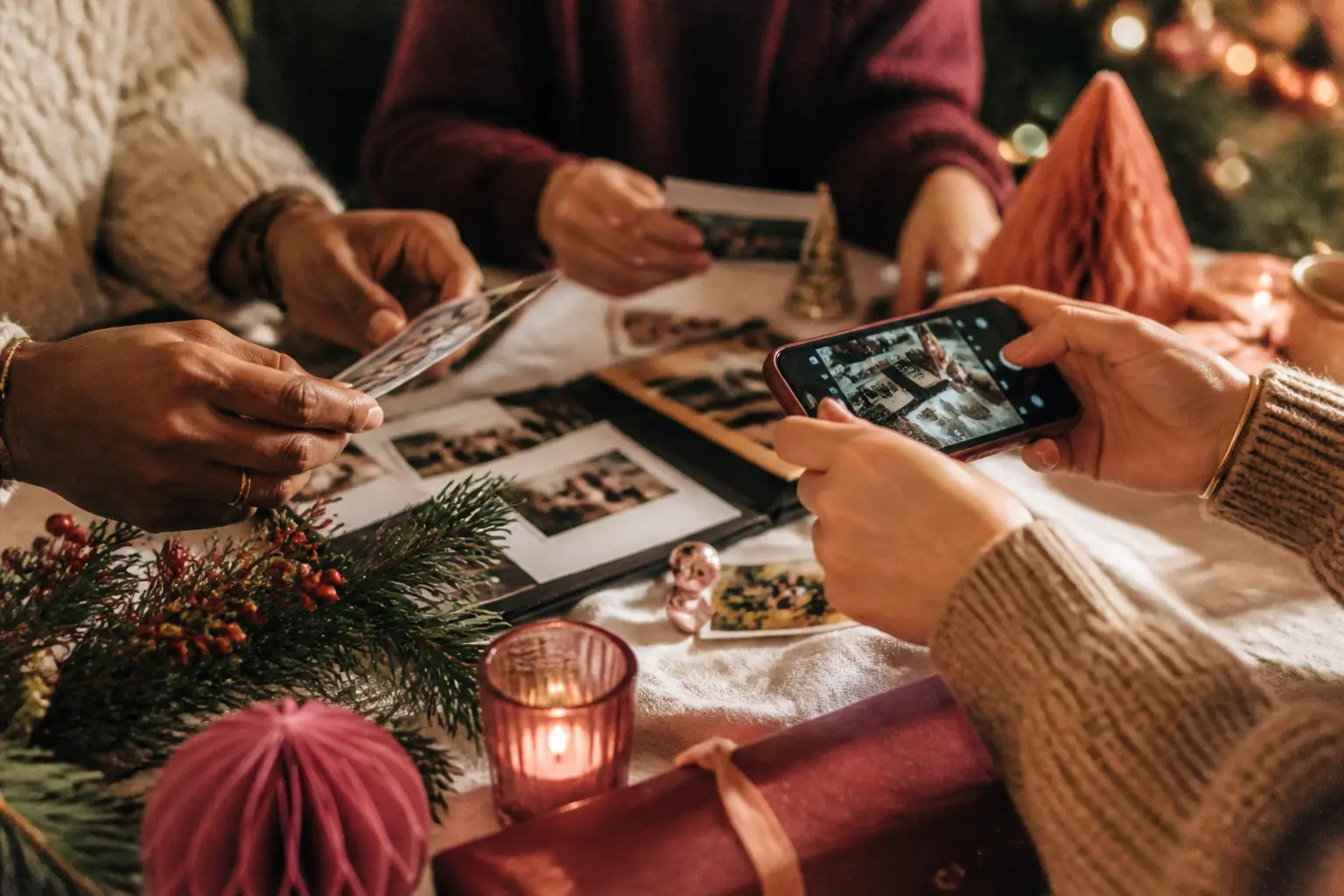
Choose a quiet, dry surface away from food, drinks and the main traffic through the house. A side table in a living room, study or spare bedroom is usually more suitable than placing precious prints beside the nibbles.
Keep the setup straightforward:
- Clear room for one item at a time.
- Plain paper and pens for notes.
- Cards headed Who? What? Where? When?
- A clean tray or box for items waiting to be returned to their owner.
- One nominated relative to make a brief list of what has been brought along.
The US National Archives recommends recording the essential context for family images: who is pictured, what is happening, where it happened and when it was taken. Those details give an image meaning when the people in it are no longer immediately recognisable. Guidance on digitising family papers and photographs.
Do not let uncertainty end the conversation. A note such as “possibly at the old house in Perth, late 1970s, left to right: Anne, Bill and an unknown neighbour” is far more useful than an unlabelled image. Clearly mark guesses as guesses and leave space for another relative to add a correction later.
Use prompts that draw out the story
Names and dates are important, but gentle questions often reveal the part that makes a photo worth keeping. Put a few prompts on the table so no one feels put on the spot.
Try asking:
- Who gave this photo to the family?
- What was happening just before or after it was taken?
- Where was this house, beach, school or farm?
- How are the people in the picture connected?
- What do you remember about the clothes, decorations, car or meal?
- Is there a family saying, nickname or tradition linked to this moment?
- Who else might know more?
Write down useful details as they emerge. When a digital copy is made, attach the notes to it or store them in a matching document. Christmas Day does not need to become a perfect historical research session. The aim is simply to stop valuable leads from disappearing.
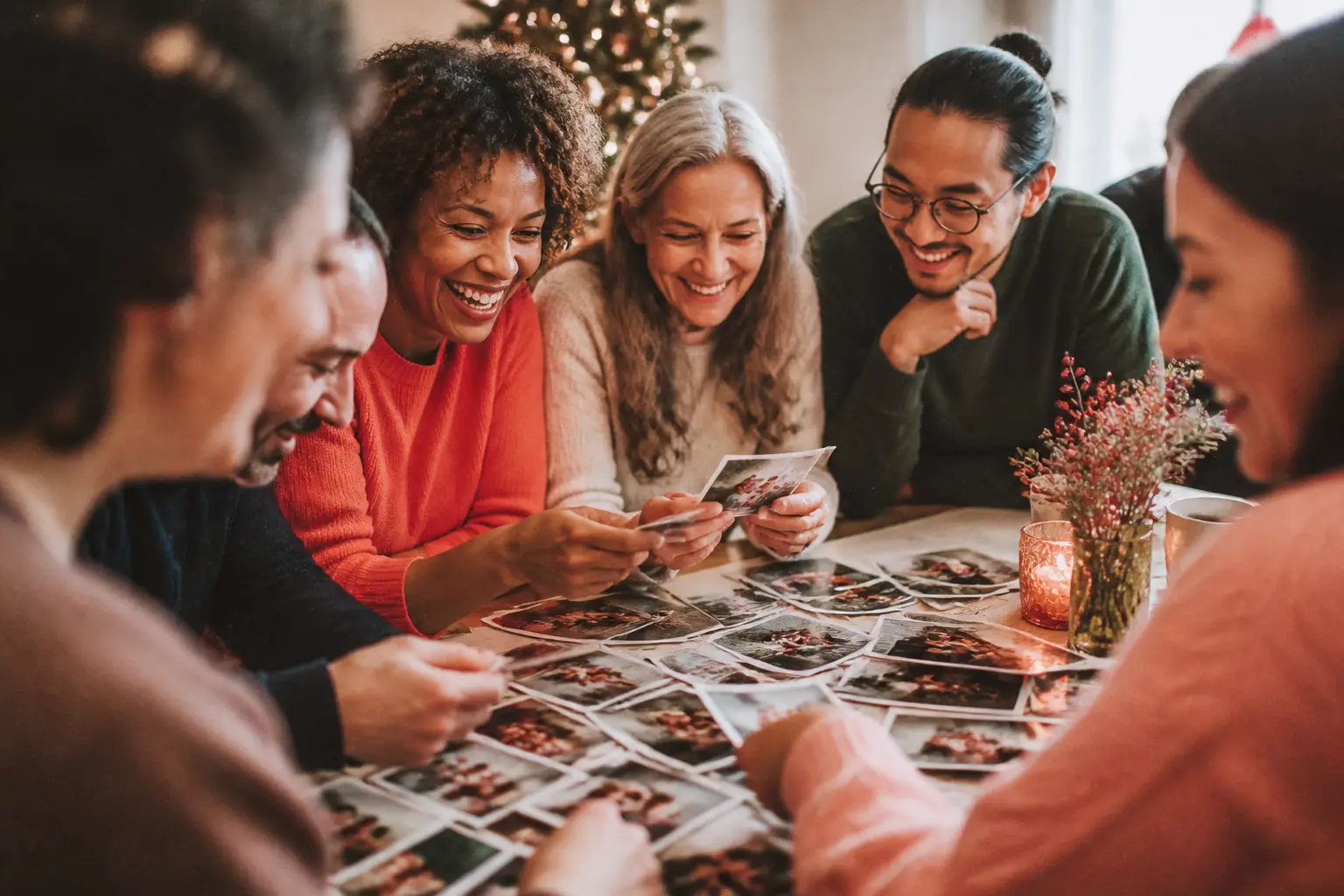
Old prints can be vulnerable, particularly when they are passed between enthusiastic relatives. Set one friendly rule: enjoy them, but handle them with care.
The National Archives and the National Film and Sound Archive of Australia advise using clean, dry hands, holding prints by their edges rather than the image surface, and keeping food and drinks away from photographs. National Archives advice on handling photographs.
Avoid attempting repairs during the celebration. Do not attach labels with glue or tape, and do not use staples, paper clips or rubber bands. The National Archives also advises against self-adhesive albums and PVC sleeves, which can damage photographs over time. Family archive storage guidance.
If an album is fragile, leave it on a stable surface and have one person turn the pages. If something is torn, curled or stuck, note its condition for later rather than trying a quick fix amid the festivities.
Turn the handover into an organised digital collection
You do not need to digitise every item while guests are there. Identification is often the most useful holiday task. Once you have names and stories, organise a separate time to make digital copies carefully and return originals promptly.
Digitisation allows an item to be viewed and shared without repeated handling, but it does not make the original disposable. The National Archives advises retaining originals because digital files can be lost. Read its digitisation advice.
As files are collected, use names that will make sense outside the immediate household. The NFSA recommends clear, consistent descriptive file names, using an example such as 2020_FamilyPicnic_JohnDoe.jpg. You might adapt that approach as follows:
1984_Christmas_Dunedin_LeeFamily.jpgcirca-1960_Grandma-Rose_at-home_Adelaide.jpg1998_New-Year_Brooklyn_Cousins-Mia-and-Josh.jpg
Use circa or unknown-date when needed rather than inventing precision. Keep a matching notes document where a filename cannot include every important detail. NFSA guidance for caring for digital materials.
Collect this year’s candid still photos too
Older family images tell the longer story. New candid still photos from the gathering add the next chapter: food being prepared, children opening crackers, the annual game, cousins on the veranda, or the quieter reset after lunch.
If you use onesnap, guests can join an event through a QR code or invite link, without a onesnap account or app download. onesnap is a mobile-first, browser-based shared disposable camera for still photos. Hosts can choose a per-guest limit of 12, 24 or 36 shots and decide when the shared roll is revealed.
Keep the invitation optional and specific. A small note near the memory table could say:
Add a few still photos from today: a tradition, a candid conversation, something being prepared, or a moment you want us to remember.
This gives guests direction without asking anyone to document the whole day. Each captured photo is saved on the guest’s device before an upload is attempted, and queued photos sync when connectivity permits. That can be useful at a busy holiday house or a rural gathering with uneven reception.
Be clear about family privacy
Being related does not mean everyone wants every photograph shared widely. Explain where the collection will be seen, who will have access and whether anyone may repost images elsewhere. Make opting out easy, especially for children and relatives who prefer not to appear in a shared gallery.
For organisations, Australian privacy guidance says it is good practice to obtain express consent for publication after explaining the intended use and audience, with extra care for children. Read the OAIC privacy guidance. New Zealand’s Privacy Commissioner similarly describes informed consent as best practice for children’s photography, including an explanation of why photos are being taken and who may receive them. New Zealand guidance for children and young people.
For families in the United States using child-directed online services, photos are treated as children’s personal information and covered services need parental consent before collecting, using or disclosing information from children under 13. FTC consumer guidance.
Finish with a preservation plan, not a pile
Before the holiday ends, decide who is doing what next. Send owners home with their original items, confirm who will organise digital copies, and tell relatives where they can add missing names or corrections.
Back up the new collection promptly. The National Archives recommends the 3-2-1 backup approach: keep three copies, on two types of storage, with one copy kept in a separate location. The NFSA also advises checking files and storage devices regularly, watching for unsupported formats and refreshing storage by copying files to new devices over time. National Archives digitisation guidance and NFSA digital preservation guidance.
For physical originals, use photo-safe enclosures and store them in a clean, cool, dry and dark part of the home. The NFSA suggests an internal bedroom cupboard rather than an attic, basement, area near water or external wall. It identifies uncoated polyester, polypropylene and polyethylene sleeves, along with archival-quality acid-free paper enclosures, as suitable options. NFSA guidance for caring for photographs at home.
A Christmas memory table does not need to solve the whole family archive. If it identifies one unknown face, saves one story, returns a treasured print safely to its owner and gathers a handful of honest new still photos, it has created a meaningful start for the year ahead.
Sources and further reading
- Thanks(giving) for the memories—a preservation family project | Smithsonian Institution Archives
- Digitizing Family Papers and Photographs | National Archives
- How to care for digital materials at home | NFSA
- Preserving Family Photos | National Archives
- How to Preserve Family Archives (papers and photographs) | National Archives
- How to care for photographs at home | NFSA
- OAIC privacy guidance on posting images
- Office of the Privacy Commissioner | Children and young people: photography and filming guidance
Written by the onesnap team with AI assistance. We never use customer photos, invent testimonials, or publish named competitor comparisons.
Read our editorial policyReady to see the night from every angle?
Create an event