community-event
A Fundraiser Photo-Sharing Plan That Keeps the Cause in View
A practical plan for gathering, sharing and reusing fundraiser photos with a clear donation path, accurate storytelling and thoughtful consent.
The onesnap team · 19 September 2026 · 9 min read

A good fundraiser does not end when the room clears. The conversations, generous gestures and small moments of connection can continue to remind supporters why the cause matters — if there is a considered plan for sharing them.
Photos can give attendees something personal to pass on, help volunteers recognise the part they played and give people who missed the event a window into what happened. The key is to make each image part of a respectful, useful path back to your cause, rather than simply posting a gallery and hoping it travels.
The Association of Fundraising Professionals notes that post-event images and social posts can help attendees feel appreciated, keep the event experience active and support promotion of a future fundraiser. It also recommends that marketing content provides a route back to an organisation’s website, fundraising page or event microsite. Read the AFP guidance on gala follow-up and integrated fundraising marketing.
Here is a practical before, during and after plan for a school appeal, community gala, charity lunch, local club auction or neighbourhood giving event in Australia, New Zealand or the United States.
Start with one clear destination
Before choosing a gallery tool, signage or social captions, decide where you want interested people to go.
That destination might be:
- the current donation page
- the fundraiser’s event page
- a page explaining the programme being supported
- a volunteer sign-up page
- a registration page for the next event
Choose one primary destination for this event. If every post sends people to a different place, supporters have to work out what action you are asking of them. A single destination makes the next step easier to understand.
Then make the call to action plain. “See the gallery” is useful, but “See the gallery and support the community pantry” is more purposeful. Put the donation or event-page link in the gallery introduction, the follow-up email and the social copy that accompanies selected images.
For campaign tracking, use a distinct campaign URL for photo-led posts where your existing fundraising system supports it. This lets your team review whether people are visiting the gallery, clicking through to donate and taking action after seeing event content. The aim is not to turn every guest into a promoter; it is to make a meaningful next step available to those who want one.
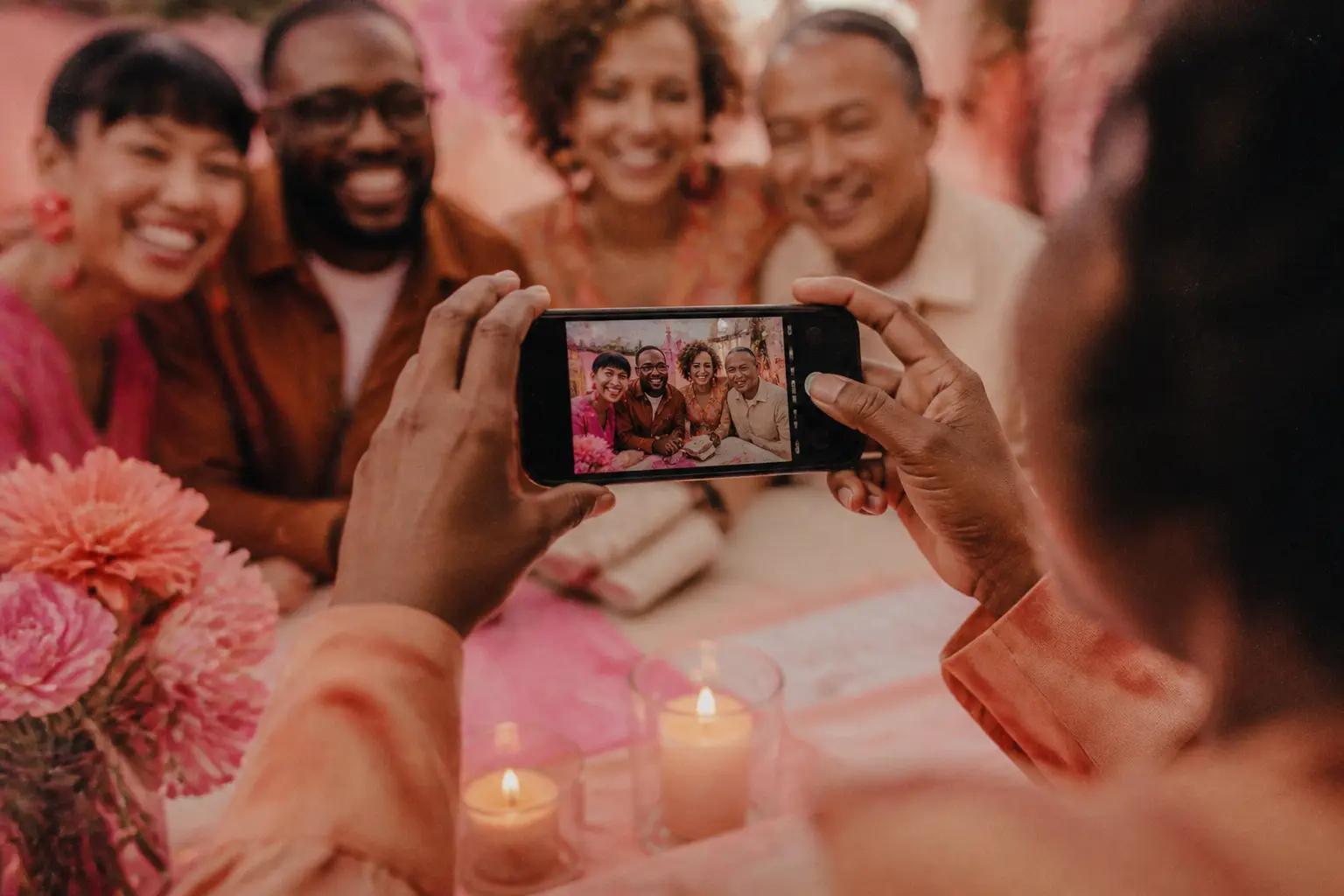
A warm photo-sharing plan is built on clarity. Attendance is not blanket approval for promotional use, especially where people are readily identifiable.
In Australia, the Office of the Australian Information Commissioner says an identifiable image can be personal information under the Privacy Act 1988. It describes express consent for publication, after explaining how an image will be used and who can see it, as good practice. Read the OAIC guidance.
For your event, explain in advance:
- that photos may be taken or contributed by guests
- where images may appear, such as an event gallery, email or social channels
- whether the gallery is intended for attendees, the wider public or both
- how someone can opt out of photography or ask for an image to be removed
- who to contact with a privacy concern
Keep the wording specific. If you may want to use selected images in a later fundraising appeal, say so at the outset rather than assuming a gallery contribution covers future promotional use.
Take extra care when children are involved
School fundraisers, junior sports events and family community days need a stronger process. New Zealand’s Privacy Commissioner recommends informing children, young people and/or parents why images are being taken, how they will be used and who they may be shared with. It identifies consent or opt-out processes, event signage and a process for concerns or removal requests as useful measures. Read the guidance for children and young people.
Make the arrangement workable on the day. Brief organisers and any hired photographer on how opt-outs are recorded and recognised. Avoid placing an opted-out child in the background of a group shot simply because they are not the stated subject. Build a removal process that is easy to find and handled promptly.
New Zealand guidance also makes an important distinction between someone incidentally captured in a public setting and a person portrayed as a customer or participant. A fundraiser should not treat a public venue or open event as automatic permission to use identifiable attendees in promotion. The Privacy Commissioner explains the distinction here.
Agree on rights before you reuse an image
Guest-contributed images and commissioned photography need separate thought. In the United States, the U.S. Copyright Office says that the person who takes a photograph is generally its author and initial copyright owner, with limited exceptions. See its guidance for photographers.
In practical terms, write down what permission the organiser receives before republishing any contributed image beyond the immediate event gallery. Your contributor terms can explain whether a guest is permitting the organisation to repost an image, include it in a future appeal or use it only for event recap communications. A contract with a hired photographer should likewise describe delivery, usage rights and any approval process.
This is not just administrative detail. Clear terms protect contributors, help your team publish with confidence and make it less likely that a strong image is used in a context nobody agreed to.
Give guests an easy way to contribute
The best guest photos are often the details your formal run sheet misses: volunteers setting up chairs, a table of donated prizes, friends greeting each other, a quiet thank-you or the collective relief when a goal is reached.
onesnap is a mobile-first, browser-based shared disposable camera for events. Guests can join through an event QR code or invite link, without creating a onesnap account or downloading an app. Each captured photo is saved on the guest’s device before an upload is attempted, and queued photos sync when connectivity permits.
For a fundraiser, place the QR code where guests have a natural pause: at check-in, near the welcome sign, beside the activity programme or near the exit. Give the sign a reason to scan, not just an instruction. For example:
- “Add your favourite moment to tonight’s shared fundraiser roll.”
- “Capture the people, purpose and small wins of the evening.”
- “Share a still photo from the night — please respect any no-photo areas.”
Keep the invitation optional. Some guests will be there to donate, volunteer, host a table or simply enjoy the occasion. No one should feel that contributing photos is another obligation.
Hosts can choose a per-guest shot limit of 12, 24 or 36 photos, and choose when the shared roll is revealed. For a fundraiser, this makes it possible to set a simple contribution boundary and decide whether the gallery appears during the event or as part of the follow-up.

A fundraising gallery should reflect the atmosphere of the event, but it should also help a new viewer understand what the community gathered to support.
Offer a short set of prompts to volunteers or guests who want direction:
- A warm arrival, reunion or welcome
- A volunteer or organiser at work
- The hands behind a raffle, meal, auction item or community activity
- A detail that represents the cause, with no sensitive personal information visible
- A speaker, performer or participant who has agreed to be photographed
- A shared reaction: applause, laughter, concentration or celebration
- The final thank-you, pack-down or farewell
Avoid asking people to stage hardship, vulnerability or emotion for the camera. If your mission involves people receiving support, preserve dignity and follow the permissions that apply to their image and story. The AFP highlights the value of human-centred storytelling and striking imagery, while truthful representation remains essential. Its marketing guidance is here.
Use current images whenever possible. If an older image is relevant to explain the organisation’s work, label it honestly so an audience is not led to believe it was taken at the current event or depicts a current situation.
Publish a curated follow-up, not a photo dump
After the event, review the available images against your consent records, contributor permissions and story goals. Choose a modest collection that gives a real sense of the gathering. The strongest post-event gallery is usually easy to browse and clear about why it exists.
A useful gallery introduction might include:
- a short thank-you to guests, volunteers and supporters
- a sentence explaining what the fundraiser supports
- a direct link to donate or learn more
- a contact route for removal or privacy requests
Then select a handful of images for email and social posts. Give each post one job. A thank-you post can celebrate volunteers. An impact post can explain the programme being supported. A final reminder can invite people who could not attend to give through the donation link.
Write captions that add context rather than merely naming what is visible. “Neighbours gathered for the winter appeal” is more useful when paired with an accurate explanation of where support is directed and a clear next action. Do not make claims about impact, outcomes or need that your organisation cannot substantiate.
Make the gallery accessible and understandable
Captions and text alternatives help more people use and understand your content. W3C guidance says informative images need text alternatives that communicate their essential information, while an image used as a link or button should describe its function. Read the W3C images tutorial.
For a fundraiser gallery, useful alt text describes the meaningful event moment, not every visual detail. For example:
- “Volunteers arranging donated food parcels on tables at the community fundraiser.”
- “Guests raising paddles during the charity auction.”
- “Three organisers smiling beside the welcome desk after the fundraising dinner.”
If an image links to your donation page, make the link purpose clear in the surrounding text or accessible label: “Donate to support the winter appeal.” Decorative flourishes do not need descriptive text.
Review what helped the cause travel
Treat photo sharing as part of the fundraising plan, not an afterthought. The AFP identifies social-media impressions as an example of a concrete marketing objective. For your own review, choose measures that match the action you wanted people to take.
You might track:
- visits to the gallery
- social shares
- clicks from photo posts to the donation or event page
- donations associated with your photo-sharing campaign URL
- removal requests or consent concerns, so next time’s process can improve
Look beyond the busiest post. Which images led people back to the cause? Which caption made the next step clearest? Did guests know where to find the gallery? Did your privacy process work smoothly for attendees, families and volunteers?
A thoughtful answer to those questions will make the next fundraiser easier to run — and help the generosity of one night remain visible, accurate and useful long after the tables are packed away.
Sources and further reading
- Eight Fundraising Gala Must-Haves | Association of Fundraising Professionals
- Integrating Your Print and Digital Marketing: 4 Tips | Association of Fundraising Professionals
- Posting photos and videos | OAIC
- Children and young people: photography and filming guidance | Office of the Privacy Commissioner
- Can a business use a photo of me in their advertising without my consent? | Office of the Privacy Commissioner
- What Photographers Should Know about Copyright | U.S. Copyright Office
- Images Tutorial | Web Accessibility Initiative (WAI) | W3C
Written by the onesnap team with AI assistance. We never use customer photos, invent testimonials, or publish named competitor comparisons.
Read our editorial policyReady to see the night from every angle?
Create an event