school-event
A School Fete Photo Plan That Respects Every Family’s Boundaries
A practical, privacy-minded plan for collecting and sharing school fete photos while giving families clear choices and respecting opt-outs.
The onesnap team · 22 September 2026 · 8 min read
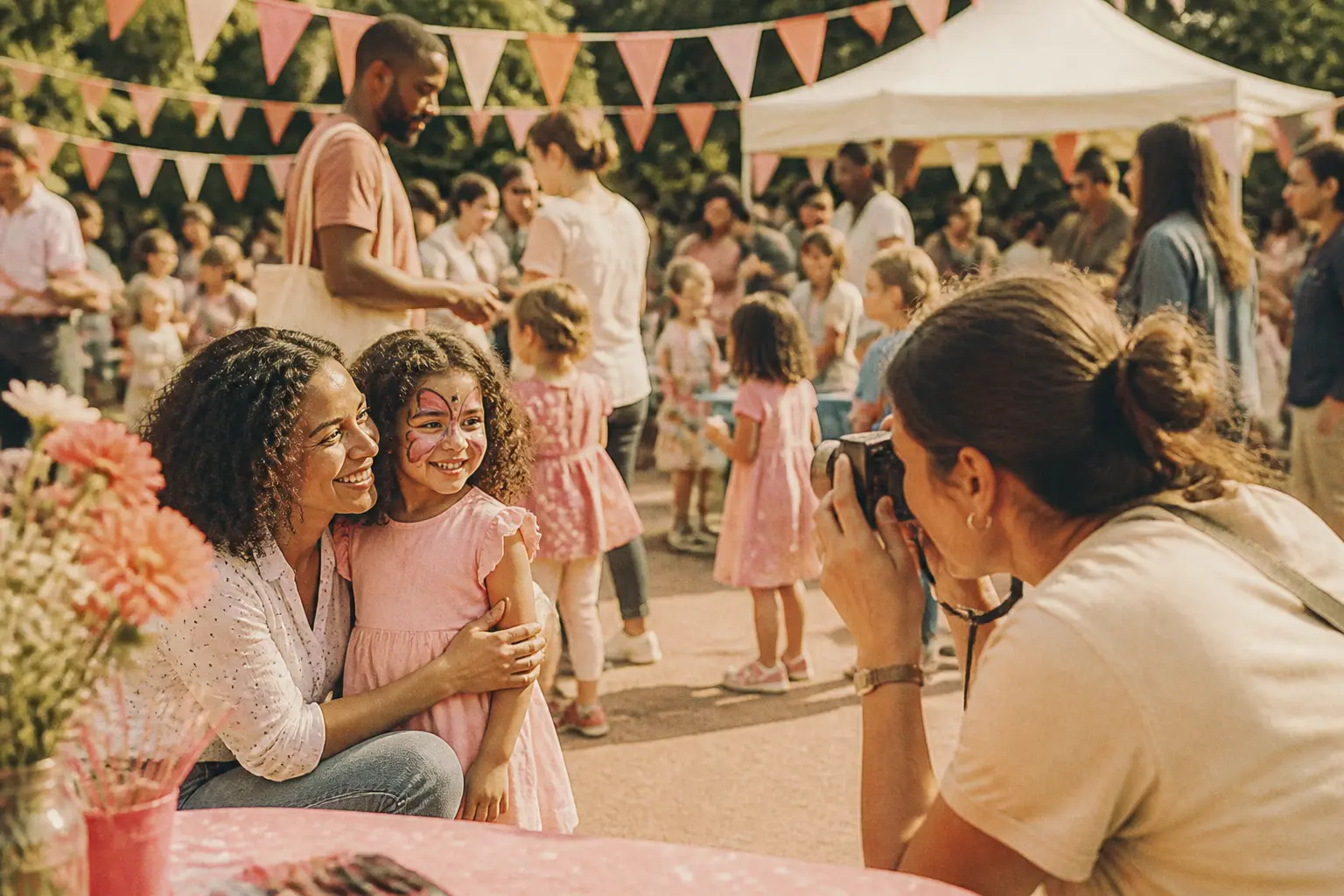
A school fete can produce the sort of photos families genuinely treasure: a child concentrating at the cake stall, friends comparing raffle prizes, volunteers setting up before the gates open and the wider school community enjoying the day together.
But collecting those memories needs more thought than putting a call out for pictures after the fete. Identifiable images of children are personal information in many contexts. A face is not the only identifying detail, either: a uniform, name tag, distinctive activity, background or location can reveal information about a child and their school. Australian privacy guidance and guidance from New Zealand’s Privacy Commissioner both make that point clear.
The good news is that a privacy-minded approach does not mean abandoning fete photos. It means treating the gallery as a planned school activity, rather than an informal collection that grows beyond anyone’s control.
Start with a specific purpose
Before choosing a gallery, inviting contributions or printing a QR code, agree on why the school is collecting images. Keep the purpose narrow and understandable.
For example, the purpose might be: to share a private record of this year’s fete with attending families and volunteers. That is very different from collecting images for future school marketing, public social posts or a newsletter that reaches a wider audience.
New Zealand privacy guidance recommends being clear about why images are being collected, why that collection is necessary, what will happen to the images and whether people have a choice. It also advises that images should generally be used only for the purpose communicated at collection. An image gathered for one school purpose should not simply be reused for another. Read the full guidance before finalising your school’s approach.
Write a short internal brief that answers:
- What kinds of moments are useful to capture?
- Who is the gallery for?
- Who may add photos?
- Who will review images before sharing?
- Where will the gallery be accessible?
- When will access end and images be removed?
- Who handles a family’s question or removal request?
If the committee cannot answer these questions in plain language, families will struggle to understand the arrangement too.
A photography notice works best when it arrives early enough for families to read it, ask questions and act on an opt-out if needed. Put it in the fete information that families already receive, rather than hiding it in a separate message.
Use ordinary language. Avoid broad wording such as “photos may be used by the school from time to time”. Instead, describe the actual plan: official photography will occur during the fete; a gallery will be shared with a defined group; families can contact a named person with concerns; and the gallery will be taken down on a stated date.
The notice should cover:
- the purpose of collecting photos;
- the intended gallery audience;
- whether guests may contribute photos;
- the opt-out process and deadline, if your school uses one;
- the contact person for questions and removal requests;
- the planned retention or removal date; and
- a reminder that any future use outside this plan needs separate consideration.
Consent and opt-out arrangements should follow your school, system and local privacy requirements. In Victoria, school policy describes an opt-out approach for crowd shots that do not feature a particular person, supported by advance notice and clear event signage explaining how to object. See the Victorian policy guidance for the details and limits.
An opt-out is only meaningful when it is easy to use. Do not make families hunt through a long form or explain personal circumstances to a large committee. Give them a direct, respectful route to the appropriate staff member.
Put clear expectations at the gate
A pre-event notice is important, but signage on the day reaches grandparents, family friends, stallholders and other visitors who may not receive school communications.
Place a simple sign at each entry point and near the main activity areas. It should explain that official fete photography is taking place, identify where guests can ask questions, and remind everyone to respect other families’ choices.
A useful sign can say:
Welcome to our school fete. Photos are being collected for the family gallery described in the fete notice. Please respect families’ privacy choices. Do not publish identifiable photos of children other than your own without permission. Questions or removal requests: [school contact].
This is not about policing every proud grandparent with a phone. It is about setting a courteous, school-wide norm. NSW guidance says fete visitors do not have consent to use student information about children other than their own, and schools can remind visitors that permission is required before publishing photos of other children. The NSW social media procedures provide useful context for this reminder.

A list of privacy choices is not enough if the people taking photos never see it. Brief official photographers and relevant volunteers before the gates open.
Give them a current, securely handled record of opt-outs according to the school’s process. Explain how children or families are identified to them without unnecessarily sharing personal details. Ask photographers to avoid close-up, featured shots of children whose families have opted out.
Also give them a positive shot list, so they do not default to close-ups of children all day. Good fete coverage can include:
- decorated stalls before visitors arrive;
- hands preparing food or arranging prizes, without names in frame;
- volunteers at work;
- wide, non-featured scenes of activities where appropriate;
- signs, handmade displays and class projects;
- performers only where the relevant permissions and school process allow it; and
- the setup, pack-down and behind-the-scenes community effort.
Ask photographers to stay alert to sensitive situations. A child may not be on an opt-out list but may be upset, receiving first aid, having a difficult moment or simply not wish to be photographed. Privacy-minded coverage includes good judgement in the moment.
Where staff are taking official photos, keep the collection under school control. NSW guidance advises use of a school device for event photography. If a personal device must be used, it advises transferring images to a school device and deleting them from the device and associated cloud backups as soon as reasonably practicable. The NSW guidance on photographs and recordings is a useful reference for setting this expectation.
Make guest contributions optional and purposeful
Guest photos can add cheerful, unexpected perspectives to a fete, but contributions should be optional. No child or family should feel that joining a gallery is part of attending the event.
onesnap can suit a tightly scoped contribution plan: it is a mobile-first, browser-based shared disposable camera where guests join through an event QR code or invite link, without needing an account or app download. The host can choose when the shared roll is revealed and set a per-guest shot limit. Those settings can help a fete committee keep contributions intentional rather than turning the gallery into an unreviewed stream.
The platform is only one part of the privacy plan. Before sharing a QR code, decide who is allowed to use it, what they should photograph and what they should not add. A short instruction beside the code might ask contributors to focus on stalls, decorations, volunteers and their own family, and to avoid identifiable close-ups of other children unless they have permission.
Avoid putting a contribution code everywhere by default. Consider whether it belongs in a family communication, at a supervised information point or in a defined school community space, rather than in a location that invites uncontrolled use.
Review before sharing
A shared fete gallery should not be treated as an automatic publication queue. Review is the step that turns good intentions into a real privacy safeguard.
Before releasing the gallery, check every image for:
- children whose families opted out;
- children who are featured rather than incidentally present;
- names, age details, tags or paperwork visible in the background;
- sensitive or unflattering situations;
- images from spaces that were not part of the communicated photography plan; and
- anything that creates a concern when considered alongside other images.
New Zealand’s Privacy Commissioner specifically recommends checking everyone in the frame, including people in the background, and avoiding identifying details such as names and ages alongside images. This matters at a busy fete, where a photo that seems centred on a stall may still include a child clearly in the background.
Keep the gallery within the audience you explained to families. A gallery shared with a defined school group is not the same thing as a public promotional post. Wider distribution can be a new use, requiring fresh consideration and, in some cases, permission. Do not assume that a photo suitable for the fete gallery is suitable for a public channel.
Set an end date and honour removal requests
Photos should not remain available indefinitely just because no one has yet complained. Retaining children’s images longer than necessary increases the chance of later unauthorised use or sharing, according to New Zealand privacy guidance.
Publish the gallery’s removal date in the original notice and follow through. Keep a simple record of who is responsible for removing access, deleting images where required and confirming completion under the school’s process.
Make it straightforward for a family to request removal. A warm response is better than a defensive one: acknowledge the request, confirm which image is involved if necessary, remove it promptly according to the school’s process, and let the family know the outcome.
Use this final fete checklist
Before sharing the first image, confirm that your school has:
- defined one clear purpose for the fete photo collection;
- told families how images will be used, who will see them and how to opt out or ask questions;
- displayed event-day signage for visitors;
- briefed photographers and volunteers on privacy choices;
- kept official image collection under appropriate school control;
- set clear guidance for optional guest contributions;
- reviewed images for opt-outs, identifying details and sensitive contexts;
- limited the gallery to the audience originally described; and
- published and assigned a removal date.
A thoughtful photo plan lets the fete feel welcoming without asking families to trade away control. The aim is not to capture every moment. It is to share the right moments, with care for every child and every family in the school community.
Sources and further reading
Written by the onesnap team with AI assistance. We never use customer photos, invent testimonials, or publish named competitor comparisons.
Read our editorial policyReady to see the night from every angle?
Create an event