wedding
How to Photograph the Room’s Reaction During Wedding Speeches
A practical plan for preserving the laughter, tears, glances and applause that make wedding speeches land.
The onesnap team · 17 September 2026 · 7 min read
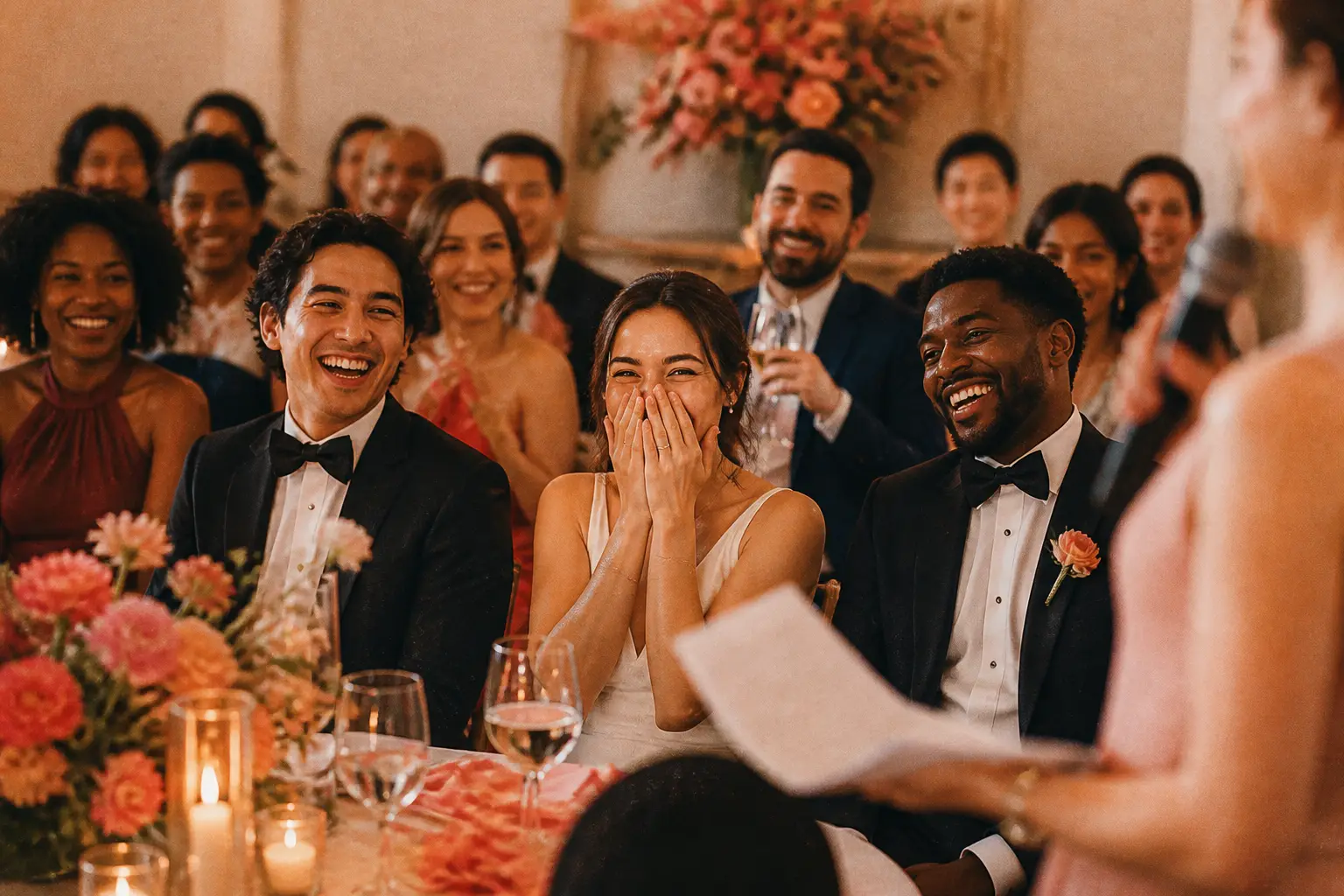
Wedding speeches are often photographed as though they are a performance: one person standing with a microphone, glass in hand, delivering a carefully prepared story. That image matters. But it is only one part of what makes the moment memorable.
The most affecting speech photos usually show what the words did to the room: the couple catching each other’s eye, a parent reaching for a napkin, friends laughing before they can stop themselves, a table lifting their glasses, or the quiet pause just before applause.
A strong plan does not ask every guest to document every speech. It gives your professional photographer clear priorities, makes the room easier to photograph, and gives a small number of willing guests a simple job: look away from the microphone when something lands.
Start with a room setup that lets people react naturally
Reaction photos depend on guests being able to see, hear and settle into the speeches. If they are craning around a pillar, trying to hear over service, or looking for the speaker, the room will feel fragmented in both real life and photos.
Choose one defined, visible speaking position. Ideally, the couple can see the speaker comfortably and the speaker can address the room without guests needing to twist in their chairs. A consistent spot also helps your photographer anticipate angles and move between the speaker, the couple and the surrounding tables with purpose. Wedding speech photography guidance recommends considering the speaker’s position carefully for exactly this reason.
Before guests are seated, look at the room from a few places:
- The couple’s seats: can they see the speaker without turning awkwardly?
- The speaker’s position: can they see the couple and enough of the room to make eye contact?
- The outer tables: will those guests be included, rather than feeling like they are watching from the sidelines?
- Your photographer’s likely routes: are there clear paths to move discreetly between key groups?
Good sound is just as important. A microphone and sound check help guests follow the speech, and the reaction follows the understanding. Wedding speech planning advice also recommends checking sound before speeches begin, particularly where the room is large or busy.
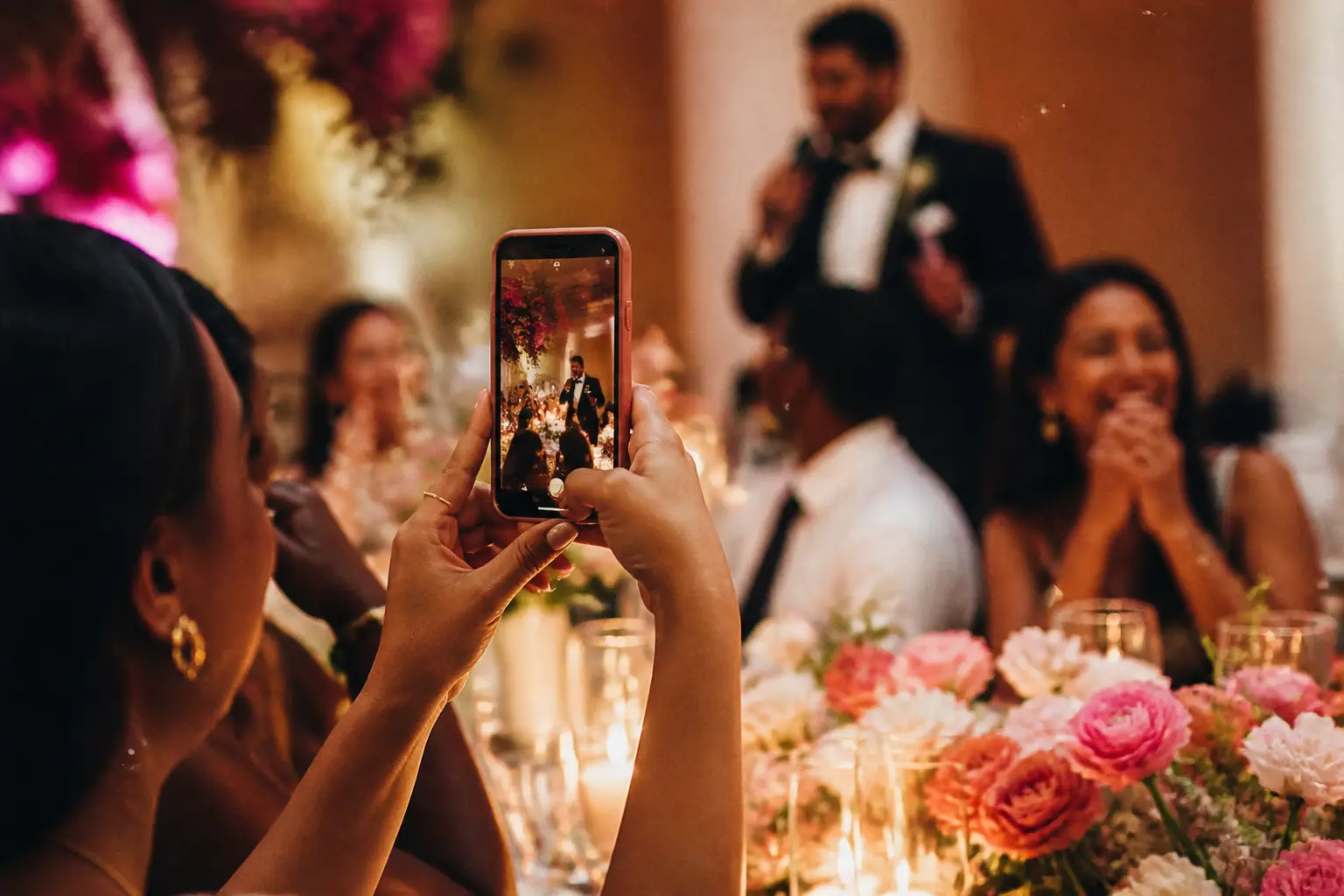
A beautiful reaction can be gone in an instant. It is much easier to capture when everyone is listening at the same time.
Ask the venue to pause food service during the key speeches and, where practical, clear used plates before the first person begins. Cutlery, circulating staff and guests midway through a course can pull attention in several directions. This is not about making the reception overly formal; it is about creating a short, shared pocket of attention for the people who have something meaningful to say.
Schedule speeches while people are seated, comfortable and still engaged with the reception. Reception photography guidance from She Said YES Photography notes that this makes it easier to photograph both the speaker and the responses around the room. If speeches are left until attention has drifted, the room may be harder to read and the emotional rhythm can be interrupted.
Put the speech section clearly on your run sheet, including:
- When speeches begin
- Speaking order
- Where each person will stand
- Any planned toast or group moment
- Any surprise element worth preparing for
Share that plan with the venue, MC and photography team in advance. Providing the full timeline helps suppliers prepare for the coverage they need, as Easy Weddings’ timeline guidance explains.
Give your photographer the emotional map, not just the schedule
The photographer does not need to know every line in every speech. They do benefit from knowing who is connected to whom and where an emotional reference may land.
Before the wedding, send a short note that names:
- Each speaker and their relationship to you
- Parents, siblings or friends likely to be mentioned
- Any absent loved one who may be acknowledged
- A story that could prompt a big group response
- Anyone who may prefer not to be photographed closely during an emotional moment
This is useful because reaction coverage is about anticipation. If the best person is speaking about the bride’s childhood, your photographer can be ready to watch the bride, her parents and siblings—not only the person at the microphone. Wedding speech photography advice specifically recommends briefing the photographer on speakers, relationships and likely references.
Keep the brief short and human. A few names and connections are more helpful than a long list of compulsory poses.
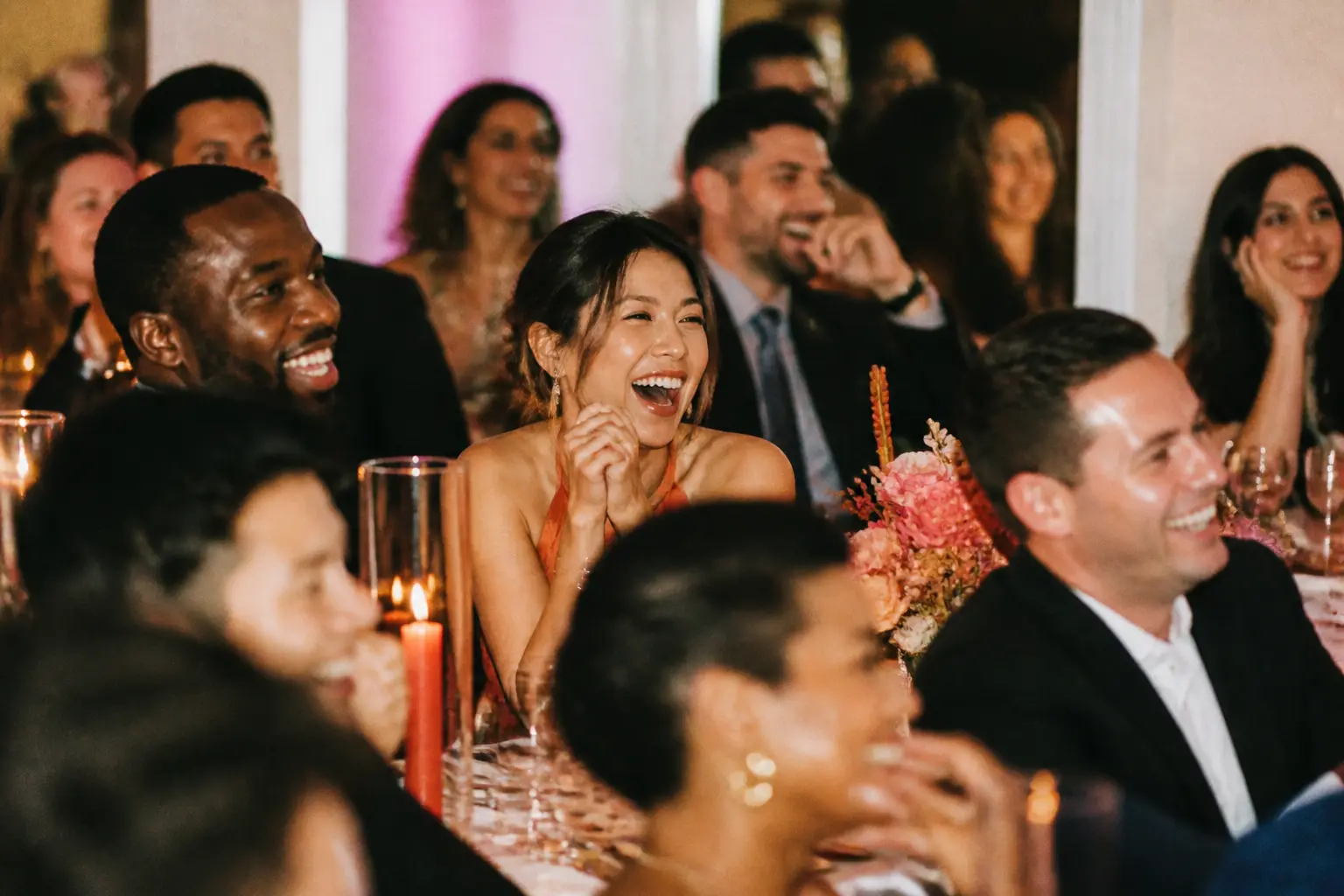
Rather than treating speeches as a single item on the photo list, think of each one as a sequence. The sequence tells the story of who spoke, what the room felt and how the moment resolved.
Before the speech
Capture the anticipation:
- The speaker standing or being introduced
- The couple turning towards them
- A parent, sibling or friend looking expectant
- A wide view that establishes the room before everyone settles
As the speech unfolds
The priority is not constant photographing. It is watching for the change in expression.
Look for:
- The couple laughing together
- A hand squeeze under the table or an exchanged glance
- A parent smiling at a familiar story
- Wedding-party members reacting to an inside joke
- One table noticing the punchline a fraction before another
- Guests leaning in, looking across the table or wiping away tears
A clean portrait of each speaker still belongs in the collection. So does a wider image that includes the speaker, couple and room. But the in-between frames are often where the speech becomes personal.
At the closing beat
Do not pack up the moment as soon as the final sentence is spoken. The toast, applause and hugs immediately afterwards often provide the clearest shared reaction.
Watch for raised glasses, standing applause, the couple crossing the room to thank someone, or family members embracing. These frames make a natural ending to each speech in the gallery.
This approach closely follows the recommended coverage sequence outlined in Wedding Speech Photography: How to Get Better Photos: room context, speaker, couple, priority people, guest reactions and the final toast or applause.
Make guest participation specific and optional
Guests can add a perspective your professional photographer cannot always reach: their own table, their closest friends and the small shared looks happening beside them. But vague instructions such as “take lots of photos” tend to produce a lot of speaker-at-the-microphone images and little else.
Instead, nominate a few photo-confident friends from different parts of the room. Ask them before the day if they would be happy to take a handful of still photos during speeches, then give them a narrow prompt:
During the speeches, take photos of the people beside you reacting. Look for laughter, happy tears, applause, clinking glasses and shared glances. Please stay seated and keep the aisle clear.
If you are using onesnap, guests can join your event through the event QR code or invite link without creating an account or downloading an app. They can use it as a simple, shared place to contribute their candid still photos. Hosts can set a per-guest shot limit of 12, 24 or 36 photos, which can help keep the request focused rather than turning speeches into a sea of raised phones.
Place the QR code where guests will see it before the speeches begin, such as near the seating plan, bar or on a small card at tables. Avoid introducing it mid-speech. The aim is to prepare people, then let them listen.
For guests, the etiquette is straightforward:
- Stay in your seat unless you have been asked to help.
- Never block the professional photographer’s view.
- Take a moment, then put the phone down and be present.
- Photograph people at your table or nearby rather than aiming across the room.
- Respect anyone who steps away from the spotlight.
Keep speeches paced enough for real reactions
Reaction photos benefit from a speech that has room to breathe. Speakers who practise aloud can find natural pauses after a joke, a meaningful memory or a toast. The Knot’s guidance for wedding toast speakers recommends practising pacing, speaking conversationally and making eye contact, all of which help the audience stay with the speaker.
For a reception with several speakers, let the MC manage transitions so the energy does not disappear between them. Australian wedding planning guidance suggests keeping speeches concise and ensuring speakers know when they are on and have microphone access. See Easy Weddings’ speech-order guide for planning considerations.
Most importantly, do not choreograph the emotion. You cannot schedule laughter or ask someone to cry on cue. You can only create the conditions: clear sound, a settled room, thoughtful coverage and enough freedom for people to respond as themselves.
When you look back, the speaker portraits will remind you of what was said. The faces around the room will remind you of what it meant.
Sources and further reading
- Wedding Speech Photography: How to Get Better Photos
- Wedding Speech Tips From a Wedding Photographer
- Full Day Wedding Photography Tips | hundreds of weddings | She Said YES Photography
- Planning the perfect wedding day timeline
- Wedding speech order: what you need to know ultimate guide
- Wedding Toast Tips for Nervous Public Speakers
Written by the onesnap team with AI assistance. We never use customer photos, invent testimonials, or publish named competitor comparisons.
Read our editorial policyReady to see the night from every angle?
Create an event